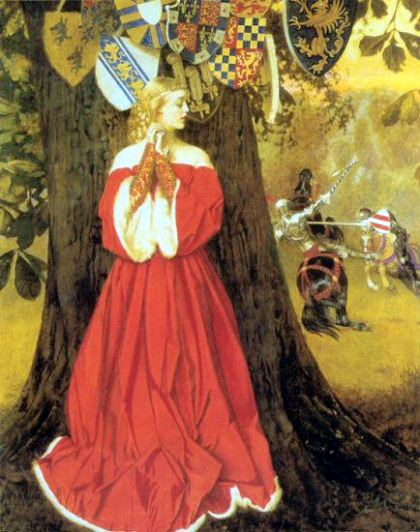
Bors to Elyane: on the King's Coins


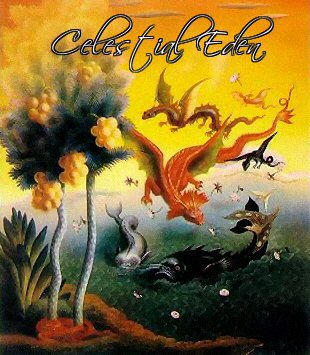
Over the next week or so we will have the opportunity of reading excerpts from Charles Williams "Bors to Elayne: on the King's Coins", one of the more accessible poems in TALIESSIN THROUGH LOGRES. On the surface about coinage, but at a much deeper level a vehicle for Williams to explore co-inherence... or as he has it here: The means of exchange.

The king has set up his mint by Thames.
He has struck coins; his dragon's loins
germinate a crowded creaturely brood
to scuttle and scurry between towns and towns,
to furnish dishes and flagons with change of food;
small crowns, small dragons, hurry to the markets
under the king's smile, or flat in houses squat.
The long file of their snout crosses the empire,
and the other themes acknowledge our king's head.
They carry on their backs little packs of value,
caravans; but I dreamed the head of a dead king
was carried on all, that they teemed on house-roofs
where men stared and studied them as I your thumbs' epigrams,
hearing the City say Feed my lambs
to you and the king; the king can tame dragons to carriers,
but I came through the night, and saw the dragonlets' eyes
leer and peer, and the house-roofs under their weight
creak and break; shadows of great forms
halloed them on, and followed over falling towns.
I saw that this was the true end of our making;
mother of children, redeem the new law.
 Posted by Hello

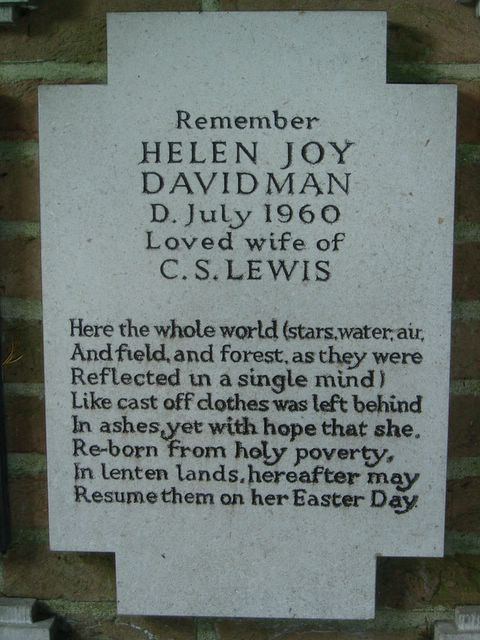
Oxford Crematorium


In Oxford Crematorium, just outside one of the chapels there is a small plaque on the wall. It was placed there at the behest of C.S. Lewis following the death of his beloved wife Joy Davidman. It reads: "Remember Helen Joy Davidman (loved wife of C. S. Lewis). Here the whole world (stars, water, air and field, and forest, as they were reflected in a single mind) like cast off clothes was left behind in ashes, yet with hope that she, reborn from Holy poverty, in Lenten lands, hereafter may Resume them on her Easter Day."  Posted by Hello

The Baby and the Bird


Old Rome had many taverns
Devoted to the vine,
Where Ovid pledged each new love
In red Falernian wine;
Catullus, shamed by Lesbia,
Poured out his grief in verse;
Apuleus noted follies,
And pondered which was worse.

Refrain:
But the place that draws me ever
When my fancy's running wild,
Is a little pub in Oxford
Called The Eagle and the Child,
The Eagle and the Child, oh,
Or else, as I have heard
Its regulars all called it--
The Baby and the Bird!


The company was lively
In Soutwark's Tabard Inn,
When Chaucer and the Pilgrims
Were telling tales within,
And on the Canterbury road
They took that April day,
And at the other hostels
Where they stayed upon their way.

(REFRAIN)

When Villon, gutter-poet,
Reeled through the Paris night,
Drunk on verse and hypocras
And looking for a fight,
The Pomme de Pin, the Cheval Blanc
All welcomed him, and more,
With wine at every table
And doxies at each door.

(REFRAIN)

Of all the City's taverns,
When Bess was England's Queen,
The Mermaid, undisputed, ruled
The literary scene.
Each Global play was played again
And christened in brown ale,
Whde Shakespeare, or Ben Jonson,
Stood up to tell the tale.

(REFRAIN)

Augustan wits made merry
At London's Cheshire Cheese--
The topic was no matter,
So that the manner please--
Be it Love or Politicks,
'Twas scandalous, I've heard,
And Johnson had his Boswell
To write down every word.

(REFRAIN) Asking,

They sing of famous taverns,
But considering them all,
The one where I had rather
Been a fly upon the wall,
Would be the Inn where Tolkien,
Lewis, Williams too,
Met with the other Inklings
Asking, "Who has something new?"

(Diana L Paxson)


Diana L. Paxson, long-time active in ‘The Mythopoeic Society’, and in ‘The Society for Creative Anachronism’, is the author of many novels, including The White Raven, The "Fionn MacCumhal trilogy, and a trilogy on the Siegfried legend, the most recent volume of which, The Lord of Horses, has been published recently.

When I'm in Oxford I often go there for lunch - they do a decent pub lunch. The Eagle & The Child is on the west side of the Woodstock Road just as the Banbury Road is forking off of it, about 1/2 mile north of the city centre. They have a lovely display of photos of the Inklings, and the lyrics to "The Baby and The Bird".
 Posted by Hello

The man born to be King


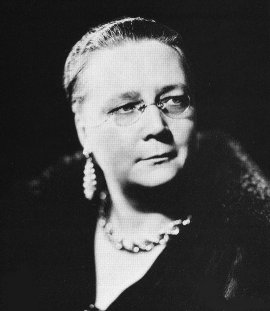
"For whatever reason God chose to make man as he is - limited and suffering and subject to sorrows and death -- he had the honesty and courage to take his own medicine. Whatever game he is playing with his creation, he has kept his own rules and played fair. He can exact nothing from man that he has not exacted from himself. He has himself gone through the whole human experience, from the trivial irritations of family life and the cramping restrictions of hard work and lack of money to the worst horrors of pain and humiliation, defeat, despair, and death. When he was a man, he played the man. He was born in poverty and died in disgrace and thought it well worthwhile."

"The Man born to be king" - Dorothy L. Sayers

Like her friends C.S. Lewis, T.S. Eliot, and Charles Williams, Sayers was a brilliant Christian thinker... who took doctrine seriously and bristled at the growth of "fads, schisms, heresies, and anti-Christ" within the Church of England. Just how satisfying Christianity was for her became clear in 1938 when she wrote a Sunday editorial for the Times: "The Christian faith is the most exciting drama that ever staggered the imagination of man...and the dogma is the drama."

"The man born to be king" a radio drama in six parts first broadcast in 1943 was instigated as a direct result of encouragement from Jack Lewis. Posted by Hello

An Inklings meeting...


"I can see the room so clearly now, the electric fire pumping heat into the dank air, the faded screen that broke some of the keener draughts, the enamel beer-jug on the table, the well-worn sofa and armchairs, and the men drifting in... leaving overcoats and hats in any corner and coming over to warm their hands before finding a chair. There was no fixed etiquette, but the rudimentary honours would be done partly by Lewis and partly by his brother... Sometimes, when the less vital members of the circle were in a big majority the evening would fall flat; but the best of them were as good as anything I shall live to see."

Sprightly Running (John Wain)

It was in this setting that, along with from lively talk about many things, and without an iota of self-consciouness about securing a place in history, Tolkien's The Lord of the Rings, C.S.Lewis's The Problem of Pain, The Screwtape Letters, The Great Divorce, Charles Williams's All Hallow's Eve, and Warnie Lewis's The Splendid Century were - along with other works by other members - read and discussed. Those of us who did not enjoy the privilege of being there can at least imagine what it must have been like to read one's own work to such a friendly but formidable jury.
 Posted by Hello

The divided nature of evil


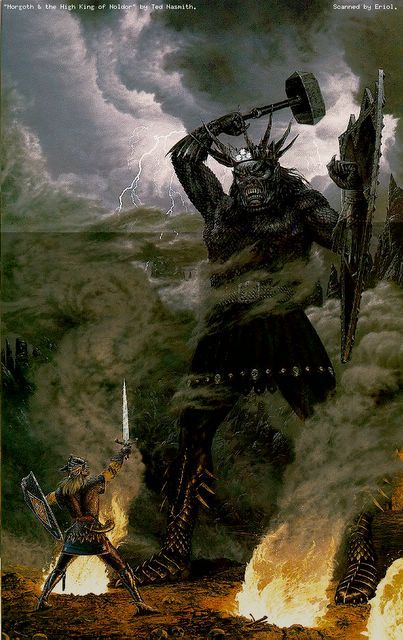
Morgoth might have been the most powerful being on Arda, but from all the battles and dark creations he forged (Carcharoth, the dragons, raising mountains, bearing the Simarils for centuries and losing his foot, etc.) his vitality and inherent power was being drained (this being illustrated in the forms Morgoth could or could not form for himself).

Sauron and the other captains of Angband were commanded by Morgoth, but he (Sauron) would eventually (in some distant future) have tried to supplant Morgoth as his strength was depleted (that is to say only if the War of Wrath never occurred).

Tolkien presents the forces of evil as continually in competition with each other, because they are essentially selfish. They co-operate only for some immediate advantage. So the orcs make a show of good fellowship, now and then, but fight each other at any time, and keep on dividing into smaller and smaller factions. Saruman will stab Sauron in the back any time, and Wormtongue will do the same for Saruman. So it is in the nature of things that Sauron would make a grab for supreme power if he thought he could get away with it.

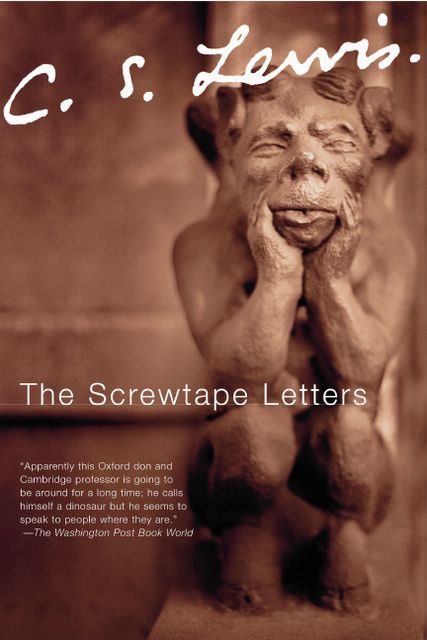
In C.S. Lewis's The Screwtape Letters, addressed by a senior devil to a junior one, as uncle to nephew, they seem very friendly. But what the nephew wants is to betray his uncle so he can get his job, and what Screwtape actually wants is his nephew -- or at least a piece of him. That's friendship down there in the Lowerarchy, and I think Sauron and Morgoth would be the same.

(Tom Shippey) Posted by Hello

Birth of Elanor the Fair, daughter of Samwise


......"Time went on, and 1421 came in. Frodo was ill again in March, but with a great effort he concealed it, for Sam had other things to think about. The first of Sam and Rosie's children was born on the twenty-fifth of March, a date that Sam noted.

......'Well, Mr. Frodo,' he said. 'I'm in a bit of a fix. Rose and me had settled to call him Frodo, with your leave; but it's not him, it's her. Though as pretty a maidchild as any one could hope for, taking after Rose more than me, luckily. So we don't know what to do.'

......'Well, Sam,' said Frodo, 'what's wrong with the old customs? Choose a flower name like Rose. Half the maidchildren in the Shire are called by such names, and what could be better?'

......'I suppose you're right, Mr. Frodo,' said Sam. 'I've heard some beautiful names on my travels, but I suppose they're a bit too grand for daily wear and tear, as you might say. The Gaffer, he says: "Make it short, and then you won't have to cut it short before you can use it." But if it's to be a flower-name, then I don't trouble about the length: it must be a beautiful flower, because, you see, I think she is very beautiful, and is going to be beautifuller still.'

......Frodo thought for a moment. 'Well, Sam, what about elanor, the sun-star, you remember the little golden flower in the grass of Lothlórien?'

......'You're right again, Mr. Frodo!' said Sam delighted. 'That's what I wanted.'

(from the appendices - LOTR)

" Posted by Hello

His Greatest Secret


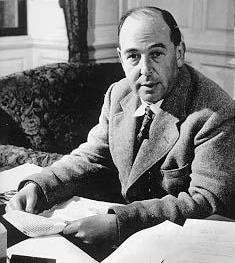
I know myself what others know far better -- how unfailingly courteous Lewis was in answering letters. I think I corresponded with him on three or four occasions...But there was a reply every time -- it might be quite brief, but it was always written for you and for nobody else.

I think this was his greatest secret. He hated casual contacts; human contact must, for him, be serious and concentrated and attentive, or it was better avoided. It might be for a moment only, but that was its invariable quality.

That is not only why so many people have precious memories of him; it is also why he couldn't write three words without the reader's feeling that they were written for him and him alone. It's why his massive books of scholarship read as delightfully as his children's stories, and why he's one of the few preachers who can be read without losing their message."

Erik Routley: C.S. Lewis at the Breakfast Table and Other Reminiscences
 Posted by Hello

Screwtape on the death of Death


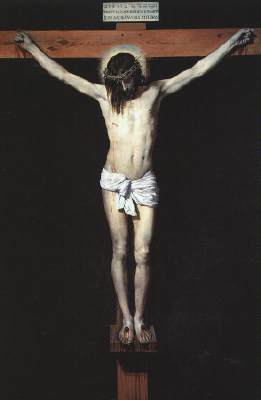
The first thing he did was to lower himself and be born as one of "them." We almost got him killed when he was a baby. But he eluded us then. He grew up to be a man. He taught those poor humans about himself, all the while not really spreading around who he was. Then one day he gave himself up to be killed by a bunch of jealous religious leaders. We figured it was a big bluff. Just an excuse to perform a public miracle and escape at the last minute. But he actually went through with it. He let them nail him to a cross and he died. We all thought, "Aha, you're beaten now! You've just made your big mistake!"

All of us were feeling, for a few hours, a big relief from that constant fear we had always felt toward the Enemy. Maybe all those prophecies about our last judgement would never happen after all. Death had claimed the Creator of life. Finally our Lord Satan would be undisputed ruler of all.

Then Sunday morning came. The Enemy reappeared. Suddenly, he was alive. Death could not hold him. But it was even worse than that. He had become an innocent sacrifice for the sins of all those humans. He had paid their penalty. He had died in their place. Now death could not hold them either. They could be forgiven and reunited with the Enemy. They can now live forever. For all practical purposes, death has died. There has never been a more disastrous day in the history of the universe.

That, my dear Wormwood, is the whole sad truth.

The Screwtape Letters Posted by Hello

After Prayers, Lie Cold


Arise my body, my small body, we have striven
Enough, and He is merciful; we are forgiven.
Arise small body, puppet-like and pale, and go,
White as the bed-clothes into bed, and cold as snow,
Undress with small, cold fingers and put out the light,
And be alone, hush'd mortal, in the sacred night,
A meadow whipt flat with the rain, a cup
Emptied and clean, a garment washed and folded up,
Faded in colour, thinned almost to raggedness
By dirt and by the washing of that dirtiness.
Be not too quickly warm again. Lie cold; consent
To weariness' and pardon's watery element.
Drink up the bitter water, breathe the chilly death;
Soon enough comes the riot of our blood and breath.

C.S. Lewis, Poems (1964) Posted by Hello

Walking with God


"Let us suppose that we are doing a mountain walk to the village which is our home. At mid-day we come to the top of a cliff where we are, in space, very near it because it is just below us. We could drop a stone onto it. But as we are no cragsmen we can't get down. We must go a long way round; five miles, maybe. At many points during that detour we shall, statically, be farther from the village than we were when we sat above the cliff. But only statically. In terms of progress we shall be far 'nearer' our baths and teas.

Since God is blessed, omnipotent, sovereign and creative, there is obviously a sense in which happiness, strength, freedom and fertility (whether of mind or body), wherever they appear in human life, constitute likenesses, and in that way proximities, to God. But no one supposes that the possession of these gifts has any necessary connection with our sanctification. No kind of riches is a passport to the Kingdom of Heaven.

At the cliff's top we are near the village, but however long we sit there we shall never be any nearer to our bath and our tea. So here; the likeness, and in that sense nearness, to Himself which God has conferred upon certain creatures and certain states of those creatures is something finished, built in. What is near Him by likeness is never, by that fact alone, going to be any nearer. But nearness of approach is, by definition, increasing nearness. And whereas the likeness is given to us-and can be received with or without thanks, can be used or abused - the approach, however initiated and supported by Grace, is something we must do."

C.S. Lewis, The Four Loves (1960) Posted by Hello

The Gest of Beren and Lúthien


Such lissom limbs no more shall run
on the green earth beneath the sun;
so fair a maid no more shall be
from dawn to dusk, from sun to sea.
Her robe was blue as summer skies,
but grey as evening were her eyes;
'twas sewn with golden lilies fair,
but dark as shadow was her hair
Her feet were light as bird on wing,
her laughter lighter than the spring;
the slender willow, the bowing reed,
the fragrance of a flowering mead,
the light upon the leaves of trees,
the voice of water, more than these
her beauty was and blissfulness,
her glory and loveliness;
and her the king more dear did prize
than hand or heart or light of eyes.
(Lines 23-41 - J.R.R. Tolkien) Posted by Hello

Lewis and Salvation by Grace...


What did Lewis have to say on salvation by grace? In the 'tome' English Literature in the Sixteenth Century Excluding Drama, he opined:

"On the Protestant view one could not, and by God's mercy, expiate one's sins. Like an accepted lover, he feels that he has done nothing, and never could have done anything to deserve such astonishing happiness. All the initiative has been on God's side, all has been free, unbounded grace. His own puny and ridiculous efforts would be as helpless to retain the joy as they would have been to achieve it in the first place. Bliss is not for sale, cannot be earned, "Works" have no "merit," though of course faith, inevitably, even unconsciously, flows out into works of love at once. He is not saved because he does works of love; he does works of love because he is saved. It is faith alone that has saved him; faith bestowed by sheer gift."
 Posted by Hello

Holy Trinity Church in Headington Quarry, Oxford


In the graveyard of Holy Trinity Church in Headington Quarry, Oxford, lies buried a professor of Medieval and Renaissance English. As befits a scholar of literature, the epitaph on his tombstone (chosen by his brother, who was later buried beside him) is taken from Shakespeare; "Men must endure their going hence." Spoken by Edgar in the final act of King Lear, these words strike a tone of stoic resignation in the face of death, and some might be surprised to find them engraved on the tombstone of this professor, C.S. Lewis, who is best known as a defender of full-blooded Christian orthodoxy. What, it may be asked, of his Christian hope?

However, the Lewis' epitaph had more significance than is at first evident. In the room where Lewis' mother died there was a Shakespearean calendar hanging on the wall. His father kept the leaf from that day, and "Men must endure their going hence" was the quotation. Warnie thus paid tribute both to Jack and to Albert and Florence (Flora) his parents in this 'less-than-obvious' quote.
 Posted by Hello

From Evil's Ultimate Impotence... [Click for full article]


Because Williams was so comfortable with the unseen world, because he truly served the good, he knew evil for what it is. Through Williams' eyes, or the words of his stories, we are enabled to see evil in contradistinction to good. Next to transcendent good, evil is a petty, boring sham, bent on destruction because it is unable to achieve creation.

Williams and Lewis shared a similar view of evil. In fact, Ransom's perception of the possessed Weston in Book Two of Lewis's science-fiction trilogy, Perelandra, is as good an introduction to Williams' own perception as any:

"He had full opportunity to learn the falsity of the maxim that the Prince of Darkness is a gentleman. Again and again he felt that a suave and subtle Mephistopheles with a red cloak and rapier and a feather in his cap, or even a somber tragic Satan out of Paradise Lost, would have been a welcome release from the thing he was actually doomed to watch. It was not like dealing with a wicked politician at all: it was more like being set to guard an imbecile or a monkey or a very nasty child."

Ransom found that though evil was certainly as terrifying, as grotesque, as he had always imagined, it was also dull and senseless.

The Triumph of Good in Charles Williams' Writings
By Elodie Ballantine

 Posted by Hello

Gollum's Song in the Dead Marshes


The cold hard lands
they bites our hands,
they gnaws our feet.
The rocks and stones
are like old bones
all bare of meat.
But stream and pool
is wet and cool:
so nice for feet!
And now we wish -

Alive without breath;
as cold as death;
never thirsting, ever drinking
clad in mail, never clinking.
Drowns on dry land,
thinks an island
is a mountain;
thinks a fountain
is a puff of air.
So sleek, so fair!
What a joy to meet!
We only wish
to catch a fish,
so juicy-sweet!

J.R.R. Tolkien
 Posted by Hello

Oxford Poetry 1947

Unique among Blackwell's editions in having a biographical index, revealing that of the 23 contributors 12 had served as officers in the war, and 2 as sergeants. Showing its mixed blood, so to speak, in being the old Blackwell's-style volume allied with the two OP pamphlets of 1946, this volume bears a heraldic cover device divided as the Oxford University crest on the left and a hand and star of David on the right. Whatever this signified, it did not appear again.

Lord David Cecil, who seldom missed an opportunity to pose as an aesthete, praised the earlier look of OP in terms reminiscent of the celebrated blue lily vase which was the only adornment of Oscar Wilde's undergraduate rooms at Magdalen: "Within its elegant blue and white covers the successive literary fashions lie enshrined, ready for the future historian to examine." (It was for examining and failing the graduate degree of Kingsley Amis, editor two years later, that he was much maligned in the latter's Memoirs.)

Introduction by Lord David Cecil

20 Northmoor Rd, Oxford

Suburban House Where JRR Tolkien Wrote the Hobbit and the Lord of the Rings is listed by Heritage Minister Andrew Mcintosh

DEPARTMENT FOR CULTURE, MEDIA AND SPORT News Release -- issued by the Government News Network on 23 November 2004

A comfortable 1920s eight bedroom house in the suburbs of Oxford is to become a Grade II listed building, Heritage Minister Andrew McIntosh announced today.

Despite having no special architectural qualities, the house is to get the extra protection from alteration or demolition that listed building status confers, because of its historical importance.

For it was there – between 1930 and 1947 – that Prof. JRR Tolkien wrote 'The Hobbit' and virtually all of 'The Lord of the Rings' trilogy, recently voted the 'most popular book in Britain' in a BBC survey.

Andrew McIntosh said:

"Buildings are usually listed because of their fine architecture or unique design. But we can also give protection to buildings that have historical association with nationally important people or events. Professor Tolkien’s house in Oxford is a fine example of this.

The house is largely unaltered since Tolkien’s time, with original doors, doorhandles and ornate window catches. As such it is an important part of our national heritage, and worthy of the additional layer of protection that listing brings."

Notes to Editors

1. The house – at 20 Northmoor Road, Oxford – was built in 1924 by Fred Openshaw, a local architect, for Basil Blackwell, the owner of Oxford’s famours bookshop. JRR Tolkien lived in the house from 1930 to 1947 and is known to have written The Hobbit and most of The Lord of the Rings trilogy in the drawing room. The interior plan, as well as numerous features, survives unaltered except for the removal of a wall between the former study and drawing room (by Prof. Tolkien) in order to increase the size of his study, presumably to accommodate the increasing number of reference books required to write his work. The main purpose of listing a building is to ensure that care will be taken over decisions affecting its future, that any alterations respect the particular character and interest of the building, and that the case for its preservation is taken fully into account in considering the merits of any redevelopment proposals. The listing covers the whole of the building. Any significant changes to exterior, interior or within the curtilage of the building would require listed building consent. The listing is not restricted to features mentioned in the list description.

2. The criteria for listing are set out in Section 6 of Planning Policy Guidance Note 15: Planning and the Historic Environment (PPG15). This can be found on this web page: http://www.odpm.gov.uk/stellent/groups/odpm–planning/documents/page/odpm–plan–606900.hcsp

Department for Culture, Media and Sport
2-4 Cockspur Street
London SW1Y 5DH

Perelandra

Click on the link to listen to the BBC's 'Perelandra' in 18 episodes

"Perelandra" continues the sometimes thrilling, sometimes mystical, but always sublimely evocative adventures of Dr.Ransom first explored in “Out of the Silent Planet”. In this second volume of C.S.Lewis’ acclaimed Cosmic Trilogy, Ransom is called to the beautiful paradise planet of Perelandra, or Venus, which is in grave peril from his old adversary Dr.Weston. Ransom encounters floating islands and bubble trees as well as an all-powerful female ruler, an Eve figure who undergoes temptation at the hands of a Satan figure in the form of Weston. Ransom must engage with Weston in a desperate struggle to save the purity of Perelandra.

“Perelandra” was first published in 1943, and again demonstrates the matchless imagination of the man who was later to create the Narnia books in delivering an exhilarating adventure which also attempts to answer some of life’s great mysteries. Lewis’ evocation of alien landscapes is rich and brilliantly imagined, demonstrating his flair as a craftsman of classic science fiction. The Cosmic Trilogy was inspired by Lewis’, then in his late thirties, involvement with an informal writing group known as the Inklings, which included his lifelong friend and fellow Oxford academic J.R.R.Tolkien. Not only are these books where Lewis first explored many styles to which he would return in his later, better-known fiction – from religious allegory, to the similarities between certain Venutian aliens and Narnian characters – but it is arguable that a cross-pollenation of ideas took place between Lewis and Tolkien: for example, the eldils could be said to be cousins to the elves of “The Lord of the Rings”.

“Out of the Silent Planet” received high praise on its publication in 1938. Hugh Walpole said in his review: "Here is a very good book; it is of thrilling interest as a story, but it is more than that; it is a kind of poem, and it has the great virtue of improving as it goes on. It is a unique thing, full of stars, cold and heat, flowers of the planets and a sharp sardonic humour." Of “Perelandra” Edwin Muir said: “Brilliantly managed … the description of Venus, in its endless age of innocence, is delightful”. With his Cosmic Trilogy, Lewis showed he was a pioneer in science- as well as children's fiction. For example, its influence can be seen on Ray Bradbury's better-known "The Martian Chronicles" and arguably Philip Pullman’s “His Dark Materials” trilogy.

The Secret of the Enigmatic Inkling Revealed (Final)

Life & Legacy

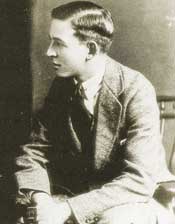
What about Williams’s own life? He was a very odd man, from all that one can gather. Tolkien claimed he never knew what Williams was talking about. Eliot said that when Williams lectured, he hopped all over the place, crossing and uncrossing his legs as he perched on the desk, jingling coins in his pocket, and so forth. Eliot also said that Williams looked like a monkey.

But by far the most perplexing thing about Williams to people who did not know him personally (and maybe to them too) was his excessively odd relationships with women. They seemed to fall all over themselves over him, although there was nothing of glamour about his person. And, if we read Letters to Lalage, we might conclude that Williams had all sorts of "behaviors," as they say now, that Freud would have loved to get at.

But — and I say this after many decades of studying everything I can about Williams — I firmly believe that he went to his grave absolutely faithful to his wife Florence, even though they lived apart for the whole of World War II, when the Oxford University Press, for which Williams worked, moved its offices from London, where the Williamses lived, to Oxford.

There are some ironies about Williams’s legacy. His followers—they might almost be called worshippers, both men and women, and I have met some of them—fell into the most vicious fighting over his manuscripts after his death. But these were the people who were supposed to have been tutored in the Way of Substitution and Exchange, in the Law of The City. What went wrong? I do not know.

I found myself caught in the middle of some of the fighting and had to make my escape (literally) on an airplane back to the United States, holding a huge canvas zipper-bag full of manuscripts that one Raymond Hunt had received from Williams, and that he (Hunt) wanted to give to Wheaton College. For all I know, I might have had my throat cut by some of Williams’s other votaries who detested Hunt, and who felt that he had made off with the material. But all of the personae in that drama are dead now, and de mortuis nil nisi bonum.

Williams’ "What the Cross Means to Me" can be found in Charles Williams: Selected Writings, edited by Anne Ridler.

Thomas Howard taught for many years at St. John’s Seminary College, the seminary of the archdiocese of Boston. Among his many works are the books Christ the Tiger, Evangelical Is Not Enough, Lead Kindly Light, On Being Catholic, and The Secret of New York Revealed, and a videotape series of 13 lectures on "The Treasures of Catholicism" (all from Ignatius Press).