Commercial Xmas


“Christmas cards in general and the whole vast commercial drive called ‘Xmas’ are one of my pet abominations: I wish they could die away and leave the Christian feast unentangled. Not of course that even secular festivities are, on their own level, an evil: but the laboured and organised jollity of this – the spurious childlikeness – the half-hearted and sometimes rather profane attempts to keep us some superficial connection with the Nativity – are disgusting.”

C.S. Lewis
Collected Letters, Volume III, page 686

Posted by Picasa

Jack's last letter...

21 Nov 63


Dear Philip Thompson,

To begin with, may I congratulate you on writing such a remarkably good letter; I certainly could not have written it at your age. And to go on with, thank you for telling me that you like my books, a thing an author is always pleased to hear. It is a funny thing that all the children who have written to me see at once who Aslan is, and grown ups never do!

I have’nt (sic) myself read the Puffin reprint you refer to, so of course missed the fault; but I will call the publisher’s attention to it.

Please tell your father and mother how glad I am to hear that they find my serious books of some value.

With all best wishes to you and to them,

Yours sincerely

C.S. Lewis

Note:
Jack died at around 5:34pm the day after this letter was written: Friday, 22nd November 1963. Warnie’s remembrance of the day, “... at five-thirty I heard a crash and ran in, to find him lying unconscious at the foot of the bed. He ceased to breathe some three or four minutes later.”
Collected Letters – Volume III : “Narnia, Cambridge and Joy 1950-1963” page 1483/4 (Harper Collins – Published this month)*

* Walter Hooper’s Preface is dated 13 September 2006

Postscript:
“What a state we have got into when we can’t say ‘I’ll be happy when God calls me’ without being afraid one will be thought ‘morbid’... if we really believe that our real home is elsewhere... why should we not look forward to the arrival?”
(Letters to an American Lady, 7th June 1959)
Posted by Picasa

Beren Defeated? Or...


He heard afar their hurrying feet,
he snuffed an odour strange and sweet;
he smelled their coming long before____________4200
they marked the waiting threat at door.
His limbs he stretched and shook off sleep,
then stood at gaze. With sudden leap
upon them as they sped he sprang,
and his howling in the arches rang.____________4205
Too swift for thought his onset came,
too swift for any spell to tame;
and Beren desperate then aside
thrust Lúthien, and forth did stride
unarmed, defenceless to defend________________4210
Tinúviel until the end.
With left he caught at hairy throat,
with right hand at the eyes he smote
- his right, from which the radiance welled
of the holy Silmaril he held.__________________4215
As gleam of swords in fire there flashed
the fangs of Carcharoth, and crashed
together like a trap, that tore
the hand about the wrist, and shore
through brittle bone and sinew nesh,___________4220
devouring the frail mortal flesh;
and in that cruel mouth unclean
engulfed the jewel's holy sheen.

Lines 4,198 to 4,223 of the "The Lay of Leithian”

Among Tolkien's papers five more lines were found:

Against the wall then Beren reeled
but still with his left he sought to shield
fair Lúthien, who cried aloud
to see his pain, and down she bowed
in anguish sinking to the ground.

However, JRRT did finish the story. See "The Silmarillion", Chapter 19.Posted by Picasa

The Last Ship (excerpt)


A sudden music to her came,
As she stood there gleaming
With free hair in the morning's flame
On her shoulders streaming.
Flutes there were, and harps were rung,
And there was sound of singing,
Like wind-voices keen and young
And far bells ringing.

JRRT - The Adventures of Tom Bombadil (Unwin 1990)
Posted by Picasa

Dumbledore


Many of those familiar with J.K. Rowling's Harry Potter books, or the films based on them, have been surprised to discover that the name of the headmaster of Hogwarts School also occurs in Tolkien's writings. (They might be even more surprised to find it in Thomas Hardy's The Mayor of Casterbridge.) The word is recorded by the OED as a dialect name for the bumblebee (and certain other insects), with quotations dating back to 1787. Tolkien used it in some versions of his poem "Errantry", in which the 'merry passenger', we are told, "battled with the Dumbledores" (History of Middle Earth VII. 86, 88).

He battled with the Dumbledores,
the Bumbles, and the Honeybees,
and won the Golden Honeycomb;
and running home on sunny seas
in ship of leaves and gossamer
with blossom for a canopy,
he polished up, and furbished up,
and burnished up his panoply.

The Ring of Words - Tolkien and the Oxford English Dictionary (OUP - 2006)
Posted by Picasa

Pocket-handkerchiefs, dwarves, and dragons


Do grown-ups have any business reading The Hobbit? A book about dwarves (Tolkien insisted on this plural), elves, and a race of small people with furry feet, called hobbits, not to mention a wizard, a dragon, and a magic ring - surely these are cliches of fantastic fiction, which adults need not take seriously. What's more, unlike Tolkien's masterpiece, The Lord of the Rings, which was clearly intended for adults, he wrote the original version of The Hobbit for reading aloud to his own children. (No he didn't - ed.)

I would beg to differ. The story of a comfort-loving hobbit who finds himself recruited as a burglar by 13 dwarves keen to avenge the deaths of their forefathers and to recover their ancestral treasure from a dragon has a great deal to tell us about courage - a virtue as important today as it was in the Anglo-Saxon times that Tolkien studied professionally.

Bilbo Baggins is far from being an ancient heroic warrior like Beowulf, though it would have been easy for Tolkien to create a cowardly character who soon leaves behind any sensation of fear and is transformed into a great hero of the old mode. Not not only does Bilbo not kill the dragon: he spends much of the climactic Battle of Five Armies knocked unconscious. On the other hand, only Bilbo has the courage to confront the dragon in his lair, and the humanity to try to stop the fighting.

Tolkien's most perceptive critic to date, Tom Shippey, argues that the hobbits are a bridge between our modern world of safe domesticity and pocket-handkerchiefs (Bilbo discovers he hasn't got any when he runs out of his house to join the dwarves in their adventure), and the frightening but exciting world of heroism, myth, and legend.

Professor Shippey writes: "Much of The Hobbit is about the clash of styles, attitudes, and behaviour patterns [between these two worlds] - though in the end one might conclude that they are not as far apart as they first seemed; that Bilbo has just as much right to the archaic world and its treasures as Thorin or Bard [the heroic warriors]" (J. R. R. Tolkien: Author of the century, HarperCollins, 2001).

But there is more to The Hobbit than an exploration of courage. In Tolkien's essay "On fairy stories", written soon after the publication of The Hobbit, he argued that such stories offer, in addition to the benefits of all good literature, special values that he called "Fantasy, Recovery, Escape, Consolation, all things of which children have, as a rule, less need than older people", adding wryly: "Most of them are nowadays very commonly considered to be bad for anybody" (Tree and Leaf, George Allen & Unwin, 1964).

'Fantasy' is not a word with high status in contemporary Western culture. Indeed, so impoverished is our view of the imagination that popular entertainment prefers the contrivances of reality TV to made-up stories, and some serious writers can add gravitas to their work only by transcribing the actual words of people caught up in historic events. But, for Tolkien, the imagination was one of our most distinctively human attributes: a key element of the divine image in human beings.

He called the creation of an imaginatively consistent secondary world 'sub-creation', and wrote in a poem that he gave to C. S. Lewis (and which was a significant factor in Lewis's conversion to Christianity) "we make still by the law in which we are made" (quoted in Tree and Leaf).

By 'Recovery', Tolkien meant a rediscovery of the freshness and vitality of the world, especially the natural world and humanity's pre-industrial artefacts, such as bread and wine. Fairy stories help to free us from the drabness and triteness of our contemporary view of the world, where the enormous material wealth many of us have has blurred our vision and narrowed our focus to 'getting and spending', as William Wordsworth put it.

In praising 'Escape', Tolkien knew he was moving on to controversial ground, but, as he said, the people who are most against anyone's escaping are jailers. "Why should a man be scorned if, finding himself in prison, he tries to get out and go home? Or if, when he cannot do so, he thinks and talks about other topics than jailers and prison-walls?"

'Consolation' was only one of Tolkien's names for what he regarded as the highest value of the fairy tale. By it, he meant that all true and complete fairy stories must have a happy ending, which he also called 'eucatastrophe', "a sudden and miraculous grace: never to be counted on to recur". He saw this as "a fleeting glimpse of Joy, Joy beyond the walls of the world, poignant as grief".

Unperceptive critics of Tolkien often accuse him of writing sentimental happy endings. In fact, Tolkien viewed life with a robust honesty, not denying that the world is full of suffering (both his parents had died by the time he was 12, and he fought in the First World War), and yet insisting that salvation can come when it is least expected.

Perhaps the most striking example of this in The Hobbit is when, at the climax of the Battle of Five Armies, Bilbo cries out: "The Eagles are coming!" There may be an implicit reference here to Christian iconography, but, more importantly, it underlines the fact that, no matter how hard we strive, we have no power, of ourselves, to save ourselves.

Jennifer Swift
(A fiction writer, a member of the Oxford C. S. Lewis Society, and has taught courses on the Inklings).

The Hobbit by J. R. R. Tolkien is published by HarperCollins.

Published in the Church Times - 3rd November 2006 Posted by Picasa

In a Punt on the Cherwell

  Posted by Picasa
For he (Lewis) talked like an angel. My idea of how angels might talk derives from Lewis. His prose is brilliant, amusing, intimate, cogent; but his talk was of a superior order. It combined fluent, informal progression with the most articulate syntax, as if, somehow, it was a text remembered – and remembered perfectly. The steps of his argument succeeded without faltering, with each quotation in the original tongue, well pronounced. (To keep up his half dozen languages he belonged to reading groups – J. R. R. Tolkien’s Kolbitar for Norse, the Dante Society for Italian, another group for Homeric Greek.) Add an extraordinary memory, and you can see how any situation was for him accompanied by a full-voiced choir of verbal associations. "Probably no reader," he writes, "comes upon Lydgate’s ‘I herd other crie’ without recalling ‘the voces vagitus et ingens in Virgil’s hell.’" For this assumption, Lewis has been called "bookish" – a dumbed down response. Of course he was bookish; hang it, he tutored in literature. Even standing on the high end of a punt in a one piece swimming costume with a single shoulderstrap, about to dive, he had time for a quotation, half heard over the water, something about silvestrem. Was he teasing me for reclining at ease in my punt...

Alastair Fowler
Yale Review, Vol. 91 No. 4 (October 2003), pp. 64–80

1984 and That Hideous Strength


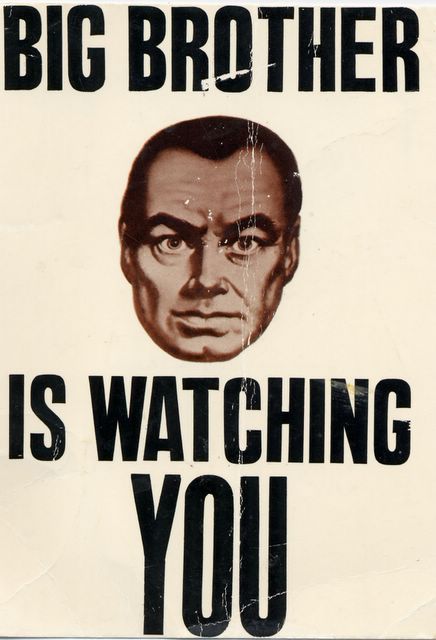
There are interesting parallels between Lewis's vision and that of George Orwell, despite the fact that Orwell had disliked Lewis's wartime religious broadcasts.

Orwell reviewed the book for the Manchester Evening News, commenting "Plenty of people in our age do entertain the monstrous dreams of power that Mr. Lewis attributes to his characters, and we are within sight of the time when such dreams will be realisable."

In some ways That Hideous Strength can be seen as describing one of the possible paths to a 1984 - one 1984, even if not quite Orwell's. The review was in 1945, before Orwell wrote 1984, and so That Hideous Strength may be considered as a possible influence.

(Source - Wikepedia)
 Posted by Picasa

That Hideous Strength (1945)


In C. S. Lewis' novel, the technological super-agency is the National Institute of Coordinated Experiments (NICE), which is empowered to solve all sorts of social and genetic problems without being bothered by "red tape." Mark and Jane Studdock are a young childless academic couple at Bracton College, whose faculty's Progressive Element is willing to sell its woods and its soul to entice the NICE. Mark and Jane's marriage is unhappy because, like most modern people, they see marriage as a contract for mutual advantage rather than as a sacred union. Mark's consuming desire doesn't even involve Jane. He wants to be a big shot, a member of the "inner ring" first at his college and then at the NICE. He gets his chance because he is good at writing propaganda.

(Phillip E. Johnson - First Things - March 2000)
[To read the whole piece, click on the title above]
 Posted by Picasa

Charles Williams on PG Wodehouse


Barbara stretched out her hands, and Lionel pulled her to her feet. "I just want to shimmer up, like Jeeves, not walk," she said. "Do you like Jeeves, Mr. Persimmons?"
Jeeves?" Gregory asked. "I don't think I know it or him or them."
"Oh, you must," Barbara cried. "When I get back to London I'll send you a set."
"It's a book, or a man in a book," Lionel interrupted. "Barbara adores it."
"Well, so do you," Barbara said. "You always snigger when you read him."
"That is the weakness of the flesh," Lionel said. "One whouldn't snigger over Jeeves any more than one should snivel over Othello. Perfect art is beyond these easy emotions. I think Jeeves -- the whole book, preferably with the illustrations -- one of the final classic perfections of our time. It attains absolute being. Jeeves and his employer are one and yet diverse. It is the Don Quixote of the twentieth century."
"I must certainly read it," Gregory said, laughing. "Tell me more about it while we have tea."

War In Heaven (Eerdmans 1978), page 157-8
Charles Williams 1930

 Posted by Picasa

Screwtape writes to his apprentice-devil nephew


Music and silence -- how I detest them both! How thankful we should be that ever since Our Father entered Hell -- though longer ago than humans, reckoning in light years, could express -- no square inch of infernal space and no moment of infernal time has been surrendered to either of those abominal forces, but all has been occupied by Noise -- Noise, the grand dynamism, the audible expression of all that is exultant, ruthless, and virile -- Noise which alone defends us from silly qualms, despairing scruples and impossible desires. We will make the whole universe a noise in the end. We have already made great strides in this direction as regards the Earth. The melodies and silences of Heaven will be shouted down in the end. But I admit we are not yet loud enough, or anything like it. Research is in progress. Meanwhile, you, disgusting little --

[Here the MS breaks off and is resumed in a different hand.]

In the heat of composition I find that I have inadvertantly allowed myself to assume the form of a large centipede. I am accordingly dictating the rest to my secretary. Now that the transformation is complete I recognise it as a periodical phenomenon. Some rumour of it has reached the humans and a distorted account of it appears in the poet Milton, with the ridiculous addition that such changes of shape are a 'punishment' imposed on us by the Enemy. A more modern writer -- someone with a name like Pshaw -- has, however, grasped the truth. Transformation proceeds from within and is a glorious manifestation of that Life Force which Our Father would worship if he worshipped anything but himself. In my present form I feel even more anxious to see you, to unite you to myself in an indissoluble embrace,

(signed) Toadpipe (for his Abysmal Sublimity Under Secretary Screwtape, TE, BS, etc.)

C.S. Lewis, The Screwtape Letters, Ch. 22, (1942)
 Posted by Picasa

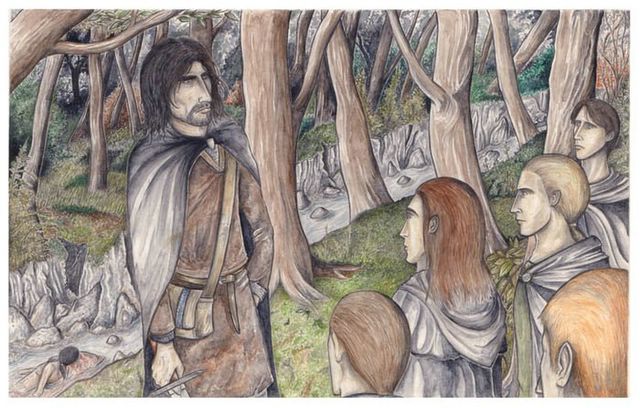
The Geste of Beren and Luthien


Book XIII.

Into the vast and echoing gloom,
more dread than many-tunnelled tomb
in Labyrinthine pyramid
where everlasting death is hid,
down awful corridors that wind
down to a menace dark enshrined;
down to the mountain's roots profound,
devoured, tormented, bored and ground
by seething vermin spawned of stone;
down to the depths they went alone.

(J.R.R. Tolkien)
 Posted by Picasa

Spirits in Bondage


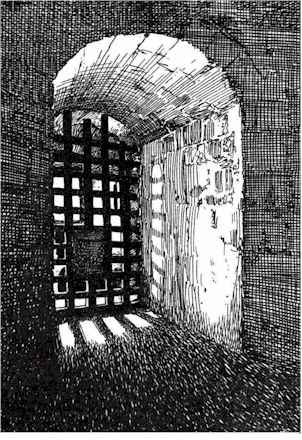
So piteously the lonely soul of man
Shudders before this universal plan,
So grievous is the burden and the pain,
So heavy weighs the long, material chain
From cause to cause, too merciless for hate,
The nightmare march of unrelenting fate,
I think that he must die thereof unless
Ever and again across the dreariness
There came a sudden glimpse of spirit faces,
A fragrant breath to tell of flowery places
And wider oceans, breaking on the shore
From which the hearts of men are always sore.

(C.S. Lewis - XV. Dungeon Gates) Posted by Picasa

An Unexpected Party


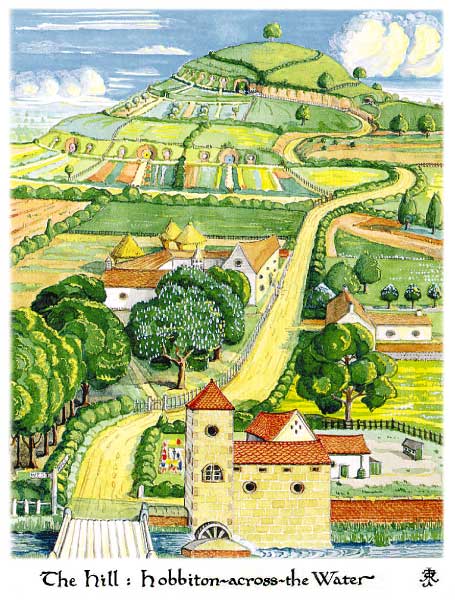
[Hobbiton - JRRT's own painting]

In a hole in the ground there lived a hobbit. Not a nasty, dirty, wet hole, filled with the ends of worms and an oozy smell, nor yet a dry, bare, sandy hole with nothing in it to sit down on or to eat: it was a hobbit-hole, and that means comfort.

It had a perfectly round door like a porthole, painted green, with a shiny yellow brass knob in the exact middle. The door opened on to a tube-shaped hall like a tunnel: a very comfortable tunnel without smoke, with panelled walls, and floors tiled and carpeted, provided with polished chairs, and lots and lots of pegs for hats and coats - the hobbit was fond of visitors. The tunnel wound on and on, going fairly but not quite straight into the side of the hill - The Hill, as all the people for many miles round called it - and many little round doors opened out of it, first on one side and then on another. No going upstairs for the hobbit: bedrooms, bathrooms, cellars, pantries (lots of these), wardrobes (he had whole rooms devoted to clothes), kitchens, dining-rooms, all were on the same floor, and indeed on the same passage. The best rooms were all on the left-hand side (going in), for these were the only ones to have windows, deep-set round windows looking over his garden, and meadows beyond, sloping down to the river.

The Hobbit - Chapter 1
 Posted by Picasa

The Inklings connection with 007 !


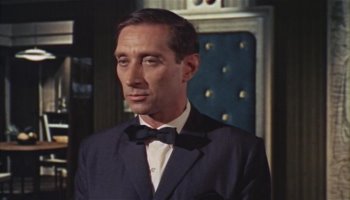
The year was 1959, Polish actor Vladek Sheybal arrived in England not knowing anyone and unable to speak English. He supported himself by working in menial jobs in a Polish delicatessen and then in an artifical jewellery shop in Brick Lane, London. When he finished his job at the jewellery shop, he took a train from Paddington station to Oxford with all his worldy goods in a small suitcase, and the only money he had in the world -- ten English pounds.

Soon after Vladek arrived in Oxford, the typical English weather turned sour and it began to rain. Taking refuge in a coffee shop, he was recognised and later befriended, by students who had seen the Polish film "Kanal" (1956) in which Vladek was featured, the night before at their local cinema -- a film as poignant and thought provoking now as it was then. Eventually, Vladek became a recognised student of English Literature at Merton College, Oxford after being taken under the wing of Professor Neville Coghill.

In 1963, Vladek was offered a small part in the second James Bond film 'From Russia with Love' but was reluctant to take the part and turned it down. Eventually he was persuaded by Sean Connery (who was by now a close friend) to take the role of the villanous chess master 'Kronsteen'. Vladek played the part as usual, to perfection; creating a character so elegantly arrogant that 'Kronsteen' is perhaps the most believable and memorable Bond villains of the entire genre.

Wonder if Vladek met the rest of the Inklings whilst at Merton? After all J.R.R. Tolkien, Neville Coghill and Hugo Dyson were all fellows at Merton in the 1950s. Posted by Picasa

Neville Coghill and The Canterbury Tales


With their astonishing diversity of tone and subject-matter, The Canterbury Tales have become one of the touchstones of medieval literature. The tales are told by a motley crowd of pilgrims as they journey for five days from Southwark to Canterbury. Drawn from all levels of society and all walks of life (from knight to nun, miller to monk), the pilgrims reveal a picture of English life in the fourteenth century that is as robust as it is representative.

Rendered with consummate skill and sensitivity into modern English verse by Neville Coghill, The Canterbury Tales (which Geoffrey Chaucer began in 1386 and never completed) retain all their vigour, their humour and indeed their poetry.

Neville Coghill did a great service to Chaucer in making his work live for many people who would not otherwise have been able to appreciate it. C S Lewis thought it masterly, and was very pleased that his friend's labour had brought the ancient text to modern eyes whilst retaining it's basic character.

A Postscript
Professor Coghill used to appear on request before various groups to read from his Chaucer translations, and, on one occasion which he cherished long after, a lady came up afterwards and said, "That was wonderful. Thank you so much. We are so sorry that Mrs. Chaucer was unable to come with you."

 Posted by Picasa

Surprised by Joy


Really, a young Atheist cannot guard his faith too carefully. Dangers lie in wait for him on every side. You must not do, you must not even try to do, the will of the Father unless you are prepared to "know of the doctrine." All my acts, desires, and thoughts were to be brought into harmony with universal Spirit. For the first time I examined myself with a seriously practical purpose. And there I found what appalled me; a zoo of lusts, a bedlam of ambitions, a nursery of fears, a harem of fondled hatreds. My name was legion. Of course I could do nothing - I could not last out one hour - without continual conscious recourse to what I called Spirit. But the fine, philosophical distinction between this and what ordinary people call "prayer to God" breaks down as soon as you start doing it in earnest. Idealism can be talked, and even felt; it cannot be lived.

Surprise by Joy (XIV Checkmate)

(I see Jack's "Mere Christianity" is once again top of the Christian bestsellers list this week in the UK)
 Posted by Picasa

A taste of Tolkien's alliterative verse


To the throne of Thingol were the three now come;
there their speech well sped, and he spoke them fair,
for Hurin of Hithlum he held in honour,
whom Beren Ermabwed as a brother had loved
and remembering Morwen, of mortals fairest,
he turned not Turin in contempt away.
There clasped him kindly the King of Doriath,
for Melian moved him with murmured counsel
and he said: "Lo, O son of the swifthanded,
the light in laughter, the loyal in need,
Hurin of Hithlum, thy home is with me,
and here shalt sojourn and be held my son.

Children of Hurin (excerpt) Posted by Picasa

Away....

.... for a week. See you on the 13th?

RR