Why Minto?


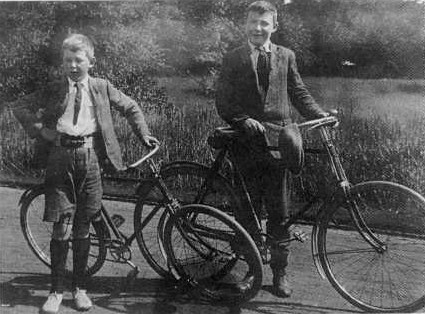
Jack and Warnie's nickname for Mrs. Moore was Minto. This apparently was derived from Minto sweets. Why? Unknown, although it is likely they were Janie Moore's favourite (as they are mine)!

(RR)
 Posted by Picasa

Minto's death


In 1951 Janie King Moore (Mrs. Moore or 'Minto') died at the age of 78. Minto was the mother of C.S. Lewis's friend from the 1st World War, Paddy Moore. She and her daughter Maureen came under Lewis's care after Paddy's death in that conflict.

Warnie wrote:

So ends the mysterious self imposed slavery in which J has lived for at least thirty years. How it began, I suppose I shall never know but the dramatic suddenness of the "when" I shall never forget. When I sailed for West Africa in 1921, we were on the terms on which we had always been: during my absence we exchanged letters in which he appeared as eager as I was for a long holiday together, when, for the first time, I was to have a long leave and plenty of money: and when I came home, I found the situation established which ended on Friday...

It is quite idle, but none the less fascinating to muse of what his life might have been if he had never had the crushing misfortune to meet her: when one thinks of what he has accomplished even under that immense handicap. It would be Macaulaysque to say that he took a First in the intervals of washing her dishes, hunting for her spectacles, taking the dog for a run, and performing the unending futile drudgery of a house which was an excruciating mixture of those of Mrs. Price and Mrs. Jellaby*; but it is true to say that he did all these things in the intervals of working for a First. Did them too with unfailing good temper (towards her) at any rate...

Most infuriating to the onlooker was the fact that Minto never gave the faintest hint of gratitude: indeed she regarded herself as J's benefactor: presumably on the grounds that she had rescued him from the twin evils of bachelordom and matrimony at one fell swoop! Another handicap of this unnatural life was to keep J miserably poor at a time of life when his creative faculties should have been at full blast, which they couldn't be under the strain of money worry; for his allowance was quite insufficient to keep Minto and Maureen as well as himself in any sort of comfort...

I wonder how much of his time she did waste? It was some years before her breakdown that I calculated that merely in taking her dogs for unneeded "little walks", she had had five months of my life. I don't think J ever felt as much as I did, the weariness of the house's unrestfulness so long as she managed it; even after ten or more years of it.

Warren H. Lewis, Brothers and Friends: The Diaries of Major Warren Hamilton Lewis, (1982)

*characters from Charles Dickens' Nicholas Nickleby.
 Posted by Picasa

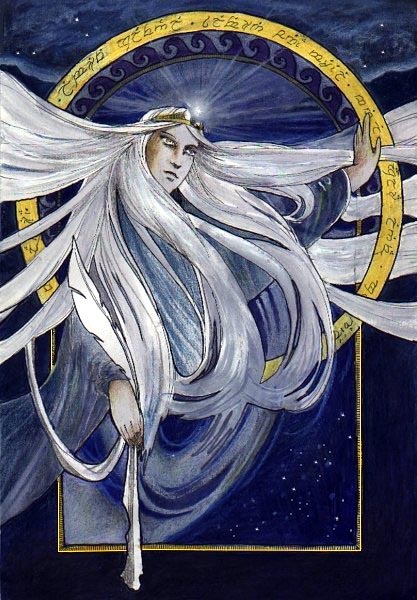
Elven Song of Elbereth


Snow-white! Snow-white! O Lady clear!
O Queen beyond the Western Seas!
O light to us that wander here
Amid the world of woven trees!

Gilthoniel! O Elbereth!
Clear are thy eyes and bright thy breath,
Snow-white! Snow-white! We sing to thee
In a far land beyond the Sea.

O stars that in the Sunless Year
With shining hand by her were sown,
In windy fields now bright and clear
We see your silver blossom blown!

O Elbereth! Gilthoniel!
We still rember, we who dwell
In this far land beneath the trees,
Thy starlight on the Western Seas.

 Posted by Picasa

Gold Paint...


Dear Phyllida,

Thanks for your most interesting cards. How do you get the gold so good? Whenever I tried to use it, however golden it looked on the shell, it always looked only like rough brown on the paper. Is it that you have some trick with the brush that I never learned, or that gold paint is better now than when I was a boy! [...]

I'm not quite sure what you meant about "silly adventure stories without my point". If they are silly, then having a point won't save them. But if they are good in themselves, and if by a "point" you mean some truth about the real world which which one can take out of the story, I'm not sure that I agree. At least, I think that looking for a "point" in that sense may prevent one sometimes from getting the real effect of the story in itself - like listening too hard for the words in singing which isn't meant to be listened to that way (like an anthem in a chorus). I'm not at all sure about all this, mind you: only thinking as I go along.

We have two American boys in the house at present, aged 8 and 6 1/2. Very nice. They seem to use much longer words than English boys of that age would: not showing off, but just because they don't seem to know the short words. But they haven't as good table manners as English boys of the same sort would. [...]

yours,
C.S. Lewis

Letters to Children (letter of Dec 18 1953)
 Posted by Picasa

Elvish Philosophy of Death and Incarnation


Of their fate after life the Elves know much, because of their long staying in Valinor and of what they learned there from the Valar. Concerning Men the most lore on their afterlife are speculations, since Men have never got in touch with the Valar in any greater degree.

The fate of the Elves: The Elves see themselves as two different parts: the Fea (spirit) and the Hroa (body). The two parts are not bound to each other, but without the Hroa, the Fea is powerless, and with no spirit, the body is dead and will soon dissolve.

The life-span of the Elves is by nature the same as that of the world (although they are often called immortal, which is a totally different thing). But the Elves call earth "Arda Sahta", the Marred World. Within its borders, nothing can be uninfluenced by Melkor, and Elves and Men, who are made of Arda's matter, are all likely to suffer in some way.

Thus the elvish Fea tend to "consume" the Hroa, until all that is left of it is a vague shape and it is indeed indestructable. Also, the Elves may die of grief or wounds (but not by disease) and then the F�a will leave the Hroa. Then the "houseless" Fea will be summoned to the Halls of Mandos, and it may go there of its own free will. Most Fea do this, but those who have been influenced by Melkor and are corrupt often dread the punishment they will receive in Mandos and stay in Middle-earth, trying to take over some other Hroa that already contains a Fea. Those who follow the summons may, if they wish, be incarnated in a new-born body, identical to the previous. The others stay in Mandos until the end of the world. For the Elves are bound to the world, and cannot leave it. All Fear, whatever way they choose, must wait in Mandos for a time; how long depends on the invidual. If the Fea has done evil in its previous life it must often wait longer until allowed to return to life. But sometimes it has to stay for good. Feanor was for instance never allowed to leave Mandos.

The reborn Elf is in all ways a child again, and does not remember its previous life until its experience and knowledge has grown. Then its life becomes double rich, since it has experienced two childhoods and has memories from two lives. There are few cases where an Elf has been reincarnated more than once. The reason for this is unknown. There are no documented examples of reincarnated Elves except, perhaps, Glorfindel of Gondolin who may have been reborn in the Second Age and helped Frodo and company to Rivendell. But it is not definitely established that the two Glorfindels are one.

The fate of Men: Men are not, contrary to the Elves, "bound to the world." They have by Eru been granted a special gift: death. When Men die, thy go to the Halls of Mandos but do not stay there for long. They proceed away from the world and leave its borders, to which fate no-one knows. This has become a dread among Men, since they do not know what will follow.

This dread is brought to them by Melkor; the Elves, who are bound to live on until the world's end, cannot understand this fear of Eru's gift. Some Men claim that they are not mortal by nature, but that it has been caused by Melkor. (The Elves, though, do not beleive this, since they do not think Melkor has the power to change the fate of a whole race.) This is based on an old legend that can be considered the story of the "fall" of mankind.

Before any Men had yet died, Eru spoke to them and told them he would watch over them and help them if the needed him. But when they later asked him things, he would more often urge them to find the answers for themselves and enjoy the finding.

Then Melkor appeared among them in a beautiful shape and told them that he would help them and give them much knowledge if they took him to lead them. He gave them many gifts and tought them much lore and they would start fearing for a life without him. Then they spoke of Eru, whom they had only heard as a voice. This made Melkor wrathful, and he said Eru was the Darkness that wished to devour them. Then he went away. After a long time of grief and poverty a darkness came over the world and blotted out the sun.

Then Melkor came back shining like a torch, and they bowed before him. Men built a temple for Melkor, and swore him their service. A long time they served him, but now he rarely gave out gifts or advice, or they had to pay for it with a gift or some evil deed.

Eru did not speak to them again, but once, when he said Men had abandoned him: but they were still his subjects. Therefore he would shorten their lives, and let them come to him and learn who was their true lord. After that, some started dying, and Men went to Melkor for help. But Melkor did not hide his plans any longer. He told them that they should obey him or he would slay them. In time he started rewarding those that served him the best, which often were those who were the most cruel to others. Some Men started talking against him openly, but those he let put to death by fire in his temple.

The legend ends saying that some Men flew and came to the sea, and found the Enemy there before them.

References:
The History of Middle-earth Vol. 10,
-- The later Quenta Silmarillion: Laws and Customs among the Eldar
-- The later Quenta Silmarillion: of Finwe and Miriel
The Silmarillion, Of the Return of the Noldor
The History of Middle-earth Vol. 10,
-- Athrabeth Finrod ah Andreth.
 Posted by Picasa

Lewis on Tolkien


"He is a very great man, His published works (both imaginative & scholarly) ought to fill a shelf by now; but he's one of those people who is never satisfied with a MS. The mere suggestion of publication provokes the reply 'Yes, I'll just look through it and give it a few finishing touches' -- wh. means that he really begins the whole thing over again.

Letters - Oct 29th 1944Posted by Picasa

Bag End


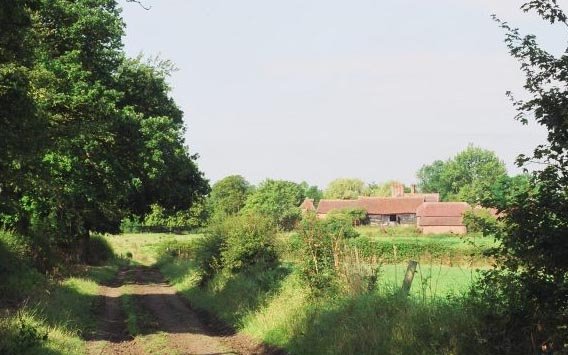
This ancient trackway leads to Bag End Farm. This farm was owned by the Tolkien's Aunt, Jane Neave. In 1923 the young Tolkien, recovering from pneumonia, spent some protracted time here.

Never underestimate the power of the Midlands countryside over an impressionable young mind... a couple of decades later, Bag End resurfaced in The Hobbit.
 Posted by Picasa

Charles Williams to his wife

Shall I fall in love with you all over again?
Twice – with you then as with you now,
Either co-inherent in either, that brow
In this and this in that, but both now
Known in the one, and a double glory so.

Charles Williams to his wife after looking at her photograph
Letter of 29 November 1944.

Williams on 'Exchange'


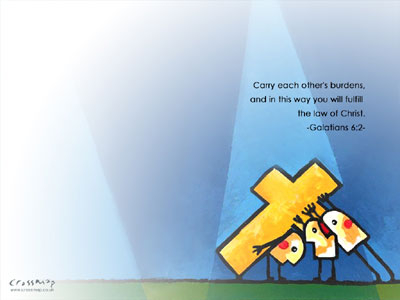
Charles talked and wrote a great deal about the practice of "exchange". It was one of the root rules of the Company. One made a pact and picked up the other person's fear or grief or pain and carried it oneself. This was the theory at any rate. The trouble was that, while the theory was irrefutable, the practice was apt to be dubious.... but how, I asked myself, was I to "present myself shyly to Almighty God in exchange for..."?

Letters to Lelange (Kent State UP), Page 54
 Posted by Picasa

The Tryst of the Worlds


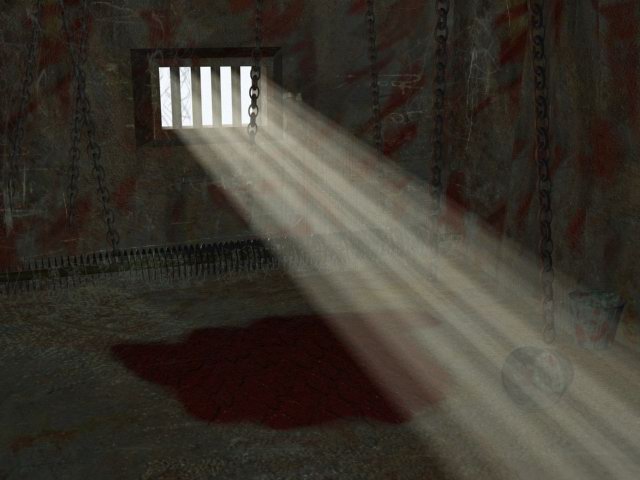
She knew what she must do. But she felt, as she stood, that she could no more do it than he. She could never bear that fear. The knowledge of being burnt alive, of the flames, of the faces, of the prolongation of pain. She knew what she must do. She opened her mouth and could not speak. In front of her, alone in his foul Marian prison, unaware of the secret means the Lord he worshipped was working swiftly for his peace, believing and unbelieving, her ancestor stood centuries off in his spiritual desolation and preluding agony of sweat. He could not see beyond the years the child of his house who strove with herself behind and before him. The morning was coming; his heart was drained. Another spasm shook him; even now he might recant. Pauline could not see the prison, but she saw him. She tried to choose and to speak.

Behind her, her own voice said: "Give it to me, John Struther." He heard it, in his cell and chains, as the first dawn of the day of his martyrdom broke beyond the prison. It spoke and sprang in his drained heart; and drove the riotous blood again through his veins: "Give it to me, give it to me, John Struther." He stretched out his arms again: he called: "Lord, Lord!" It was a devotion and an adoration; it accepted and thanked. Pauline heard it, trembling, for she knew what stood behind her and spoke. It said again: "Give". He fell on his knees, and in a great roar of triumph he called out: "I have seen the salvation of my God."

Charles Williams : "Descent into Hell" (Chapter 9)

An interesting essay on William James and Charles Williams can be found at
http://www.findarticles.com/p/articles/mi_m2096/is_3_53/ai_112212955
(Click on title above)... entitled "A terrible good: William James, Charles Williams and divided consciousness".

A very useful comparison of two important writers, but useful for our purposes for the insights into Williams and, in particular, "Descent into Hell".


 Posted by Picasa

The Hobbit on LP


This set of LP records include an eight-page booklet with pictures of J.R.R. Tolkein and reader Nicol Williamson; track list/synopses; notes on the recording by Argo founder Harley Usill; and essay by producer Lissa Demetriou. This rare, eight-side version of 'The Hobbit' is one of the great spoken-word recordings of the past fifty years and a must-have for all lovers of Tolkein's classic.

An anonymous reader/reviewer at Amazon's UK site wrote, "My favourite version is read by Nicol Williamson - This recording is one of the few actually authorised by Professor Tolkien. The story is well edited and Nicol Williamson's narration is brilliant. The accents he uses for the various characters are perfect: Bilbo is from the West Country; the spiders are Irish; Gollom is Welsh; and so on. The edition is a bit difficult to track down now - I wish someone would re-release it."

(Of course, this blogmaster has a copy)!
 Posted by Picasa

Friday, 4th July, 1947


(Jack & Warnie)

After dinner I read about half of the batch of [the new] Hobbit* which Tollers** sent me: how does he keep it up? The crossing of the marshes by Frodo, Sam and Gollum in particular is magnificent.. After tea another walk...While I was hesitating in the wet grey twilight, a corncrake started up in a field of young wheat, and no nightingale could have ravished me as did its harsh song... As I plodded home in the rain, under weather conditions themselves extraordinarily reminiscent of old days, my mind was full of pictures evoked by the corncrake: particularly of smoking cigarettes with Jack on the top of the bow of the study window, reached by climbing out of our bedroom window.

But while my thoughts are tender, I could not summon a single regret; at 52 I may be nearing the end of the race, but how infinitely preferable it is to be 52 rather than 16! It is astonishing to me that practically the whole weight of literature takes it as axiomatic that nothing can make up for the loss of youth; at least Lamb and Stevenson are the only two men I can think of at the moment who have anything to say on the other side.

Meditating as I walked, I came to the conclusion that discontent and envy made the permanent background of my youth -- envy, hopeless permanent envy of those who were good at games: of those with attractive manners: of those who got their clothes made in town and owned motorbikes: even of those who were good looking: and all coupled with that self consciousness which at 15 or 16 can be a perfect torment...

No, give me the level road of the 'fifties', and anyone who likes may sigh for the ecstasies of youth. Ecstasies there are to be sure: I remember as if it were last week the first time I walked up College with a double first: but then so do I remember the time when I was senior enough to suffer agonies at being snubbed by the head of the House.

Warren H. Lewis, Brothers and Friends: The Diaries of Major Warren Hamilton Lewis, (ed. Clyde S. Kilby & Marjorie Lamp Mead, 1982) Posted by Picasa

Show me the Road that I must walk...


Waitonga Path, Ruapehu, New Zealand

"The road goes on forever," said Pippen; "but I can't without our rest. It is high time for lunch." He sat down on the bank at the side of the road and looked away east into the haze, beyond which lay the River, and the end of the Shire in which he had spent all his life. Sam stood by him. His round eyes were wide open -- but he was looking across lands he had never seen to a new horizon.

"Do Elves live in those woods?" he asked.

"Not that I ever heard," said Pippen. Frodo was silent. He too was gazing eastward along the road, as if he had never seen it before. Suddenly he spoke, aloud but as if to himself, saying slowly:

The Road goes ever on and on
Down from the door where it began.
Now far ahead the Road has gone,
And I must follow, if I can,
Pursuing it with weary feet,
Until it joins some larger way,
Where many paths and errands meet.
And wither then? I cannot say.

Written by Bilbo and quoted by Frodo: 'Bilbo's walking song'. There is a wonderful piece of prose accompanying it, comparing the Road to a river, with every path a tributary, and every doorstep a spring; very JRRT. In the the whole Tolkien corpus many paths and errands do indeed meet, giving his work the sense of 'depth' readers so much enjoy. In the Ring trilogy, the 'fellowship of the ring' increases both in size and bravery; likewise, the forces of evil grow in intensity and malice. In the end, we rejoice because of the faithful fellowship. After months of danger, conflict, terror, and fatigue, the forces of evil simply cannot stand against the gentle, poorly armed hobbits, who persist in their mission to the very end, even unto death.

But did Tolkien, a devout Catholic Christian have another source for his muse?

"For my enemy has sought my life, crushed me to the ground, and made me live in dark places like those who are long dead. My spirit faints within me; my heart within me is desolate. I remember the time passed; I muse upon all your deeds; I consider the works of your hands. I spread out my hands to you; my soul gasps to you like a thirsty land. Oh Lord, make haste to answer me; my spirit fails me; do not hide your face from me or I shall be like those who go down to the pit. Let me hear of your loving kindness in the morning, for I put my trust in you; show me the Road that I must walk, for I lift up my soul to you." (Psalm 143)
 Posted by Picasa

Leaf by Niggle


"That was probably the last time Niggle's name ever came up in conversation. However, Atkins preserved the odd corner. Most of it crumbled; but one beautiful leaf remained intact. Atkins had it framed. Later he left it to the Town Museum, anf for a long while 'Leaf: by Niggle' hung there in a recess, and was noticed by a few eyes. But eventually the Museum was burnt down, and the leaf, and Niggle, were entirely forgotten in his old country.

J.R.R. Tolkien "Tree and Leaf"  Posted by Picasa

The Reality of Trees


Forest in South Island, New Zealand

We do not look at trees either as Dryads or as beautiful objects while we cut them into beams: the first man who did so may have felt the price keenly, and the bleeding trees in Virgil and Spenser may be far-off echoes of that primeval sense of impiety. The stars lost their divinity as astronomy developed, and the Dying God has no place in chemical agriculture. To many, no doubt, this process is simply the gradual discovery that the real world is different from what we expected... but that is not the whole story. It is not the greatest of modern scientists who feel most sure that the object, stripped of its qualitative properties and reduced to mere quantity, is wholly real. Little scientists, and little unscientific followers of science, may think so. The great minds know very well that the object, so treated, is an artificial abstraction, that something of its reality has been lost.

C.S. Lewis, The Abolition of Man (1943)

While visiting New Zealand in November and December 2005, we visited Mount Doom, Mordor, Gollom's Pool in the North, and Isengard, Fangorn forest, the Misty Mountains, and Treebeard in the South. Gullible tourists?
 Posted by Picasa

The Ents' Marching Song


We come, we come with roll of drum: ta-runda runda runda rom!
We come, we come with horn and drum: ta-runa runa runa rom!
To Isengard! Though Isengard be ringed and barred with doors of stone;
Though Isengard be strong and hard, as cold as stone and bare as bone,
We go, we go, we go to war, to hew the stone and break the door;
For bole and bough are burning now, the furnace roars - we go to war!
To land of gloom with tramp of doom, with roll of drum, we come, we come;
To Isengard with doom we come!
With doom we come, with doom we come!

(JRRT)

 Posted by Picasa

Transformation


In the heat of composition I find that I have inadvertently allowed myself to assume the form of a large centipede. I am accordingly dictating the rest to my secretary. Now that the transformation is complete I recognise it as a periodical phenomenon. Some rumour of it has reached the humans and a distorted account of it appears in the poet Milton, with the ridiculous addition that such changes of shape are a 'punishment' imposed on us by the Enemy. A more modern writer - someone with a name like Pshaw - has, however, grasped the truth. Transformation proceeds from within and is a glorious manifestation of that Life Force which Our Father would worship if he worshipped anything but himself. In my present form I feel even more anxious to see you, to unite you to myself in an indissoluble embrace.

Signed Toadpipe
For his Abysmal Sublimity Under Secretary Screwtape, T.E., B.S., etc.

C.S. Lewis - "The Screwtape Letters", 1942 (page 114, 115) Posted by Picasa

On Charles Williams' death


"You will have heard of the death of my dearest friend, Charles Williams and, no doubt, prayed for him. For me too, it has been, and is, a great loss. But not at all a dejecting one. It has greatly increased my faith. Death has done nothing to my idea of him, but he has done - oh, I can't say what - to my idea of death. It has made the next world much more real and palpable. We all feel the same. How one lives and learns".

(excerpt from a letter to Sister Penelope CSMV, May 28th, 1945)
C.S. Lewis - Collected Letters, Volume II
 Posted by Picasa

Wycliffe Hall Summer School (click here)


This is an outstanding opportunity for Christians to grow in their knowledge of God and to be spiritually refreshed in the city where many famous Christians have studied in the past, including: John Wesley, Thomas Cranmer, Charles Dodgson (Lewis Carroll), George Whitefield, Dorothy L Sayers, J R R Tolkien and of course John Wycliffe himself.

C S Lewis also studied and taught in Oxford and we will be devoting considerable time to the study of his work during the week.

You can also enjoy the beautiful 'Dreaming Spires' of the Oxford University colleges, as well as a wealth of museums, theatres, restaurants and art galleries, with Blenheim Palace, the birth place of England's most famous son, Sir Winston Churchill, only a short journey away.

Summer School Prospectus
Wycliffe Hall 2006
 Posted by Picasa

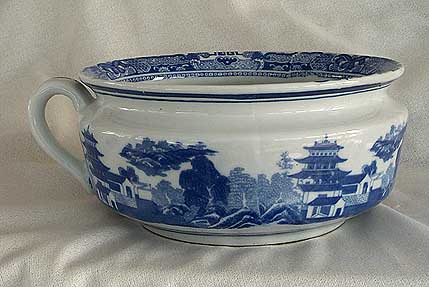
The chamber pot


Kenneth Tynan recalled that his tutor at Oxford, C.S. Lewis, was in the habit of breaking off the tutorial to piddle, noisily, in a nearby chamber pot. What with the sherry and the pipe-stuffing, it helped get him through the hour.

John Sutherland
Wednesday February 1, 2006
The Guardian
 Posted by Picasa