The Tryst of the Worlds


She knew what she must do. But she felt, as she stood, that she could no more do it than he. She could never bear that fear. The knowledge of being burnt alive, of the flames, of the faces, of the prolongation of pain. She knew what she must do. She opened her mouth and could not speak. In front of her, alone in his foul Marian prison, unaware of the secret means the Lord he worshipped was working swiftly for his peace, believing and unbelieving, her ancestor stood centuries off in his spiritual desolation and preluding agony of sweat. He could not see beyond the years the child of his house who strove with herself behind and before him. The morning was coming; his heart was drained. Another spasm shook him; even now he might recant. Pauline could not see the prison, but she saw him. She tried to choose and to speak.

Behind her, her own voice said: "Give it to me, John Struther." He heard it, in his cell and chains, as the first dawn of the day of his martyrdom broke beyond the prison. It spoke and sprang in his drained heart; and drove the riotous blood again through his veins: "Give it to me, give it to me, John Struther." He stretched out his arms again: he called: "Lord, Lord!" It was a devotion and an adoration; it accepted and thanked. Pauline heard it, trembling, for she knew what stood behind her and spoke. It said again: "Give". He fell on his knees, and in a great roar of triumph he called out: "I have seen the salvation of my God."

Charles Williams : "Descent into Hell" (Chapter 9)

An interesting essay on William James and Charles Williams can be found at
http://www.findarticles.com/p/articles/mi_m2096/is_3_53/ai_112212955
(Click on title above)... entitled "A terrible good: William James, Charles Williams and divided consciousness".

A very useful comparison of two important writers, but useful for our purposes for the insights into Williams and, in particular, "Descent into Hell".


 Posted by Picasa

The Hobbit on LP


This set of LP records include an eight-page booklet with pictures of J.R.R. Tolkein and reader Nicol Williamson; track list/synopses; notes on the recording by Argo founder Harley Usill; and essay by producer Lissa Demetriou. This rare, eight-side version of 'The Hobbit' is one of the great spoken-word recordings of the past fifty years and a must-have for all lovers of Tolkein's classic.

An anonymous reader/reviewer at Amazon's UK site wrote, "My favourite version is read by Nicol Williamson - This recording is one of the few actually authorised by Professor Tolkien. The story is well edited and Nicol Williamson's narration is brilliant. The accents he uses for the various characters are perfect: Bilbo is from the West Country; the spiders are Irish; Gollom is Welsh; and so on. The edition is a bit difficult to track down now - I wish someone would re-release it."

(Of course, this blogmaster has a copy)!
 Posted by Picasa

Friday, 4th July, 1947


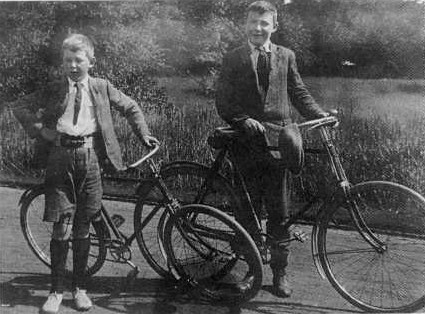
(Jack & Warnie)

After dinner I read about half of the batch of [the new] Hobbit* which Tollers** sent me: how does he keep it up? The crossing of the marshes by Frodo, Sam and Gollum in particular is magnificent.. After tea another walk...While I was hesitating in the wet grey twilight, a corncrake started up in a field of young wheat, and no nightingale could have ravished me as did its harsh song... As I plodded home in the rain, under weather conditions themselves extraordinarily reminiscent of old days, my mind was full of pictures evoked by the corncrake: particularly of smoking cigarettes with Jack on the top of the bow of the study window, reached by climbing out of our bedroom window.

But while my thoughts are tender, I could not summon a single regret; at 52 I may be nearing the end of the race, but how infinitely preferable it is to be 52 rather than 16! It is astonishing to me that practically the whole weight of literature takes it as axiomatic that nothing can make up for the loss of youth; at least Lamb and Stevenson are the only two men I can think of at the moment who have anything to say on the other side.

Meditating as I walked, I came to the conclusion that discontent and envy made the permanent background of my youth -- envy, hopeless permanent envy of those who were good at games: of those with attractive manners: of those who got their clothes made in town and owned motorbikes: even of those who were good looking: and all coupled with that self consciousness which at 15 or 16 can be a perfect torment...

No, give me the level road of the 'fifties', and anyone who likes may sigh for the ecstasies of youth. Ecstasies there are to be sure: I remember as if it were last week the first time I walked up College with a double first: but then so do I remember the time when I was senior enough to suffer agonies at being snubbed by the head of the House.

Warren H. Lewis, Brothers and Friends: The Diaries of Major Warren Hamilton Lewis, (ed. Clyde S. Kilby & Marjorie Lamp Mead, 1982) Posted by Picasa

Show me the Road that I must walk...


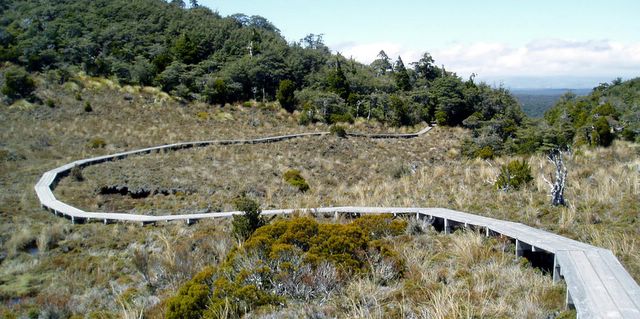
Waitonga Path, Ruapehu, New Zealand

"The road goes on forever," said Pippen; "but I can't without our rest. It is high time for lunch." He sat down on the bank at the side of the road and looked away east into the haze, beyond which lay the River, and the end of the Shire in which he had spent all his life. Sam stood by him. His round eyes were wide open -- but he was looking across lands he had never seen to a new horizon.

"Do Elves live in those woods?" he asked.

"Not that I ever heard," said Pippen. Frodo was silent. He too was gazing eastward along the road, as if he had never seen it before. Suddenly he spoke, aloud but as if to himself, saying slowly:

The Road goes ever on and on
Down from the door where it began.
Now far ahead the Road has gone,
And I must follow, if I can,
Pursuing it with weary feet,
Until it joins some larger way,
Where many paths and errands meet.
And wither then? I cannot say.

Written by Bilbo and quoted by Frodo: 'Bilbo's walking song'. There is a wonderful piece of prose accompanying it, comparing the Road to a river, with every path a tributary, and every doorstep a spring; very JRRT. In the the whole Tolkien corpus many paths and errands do indeed meet, giving his work the sense of 'depth' readers so much enjoy. In the Ring trilogy, the 'fellowship of the ring' increases both in size and bravery; likewise, the forces of evil grow in intensity and malice. In the end, we rejoice because of the faithful fellowship. After months of danger, conflict, terror, and fatigue, the forces of evil simply cannot stand against the gentle, poorly armed hobbits, who persist in their mission to the very end, even unto death.

But did Tolkien, a devout Catholic Christian have another source for his muse?

"For my enemy has sought my life, crushed me to the ground, and made me live in dark places like those who are long dead. My spirit faints within me; my heart within me is desolate. I remember the time passed; I muse upon all your deeds; I consider the works of your hands. I spread out my hands to you; my soul gasps to you like a thirsty land. Oh Lord, make haste to answer me; my spirit fails me; do not hide your face from me or I shall be like those who go down to the pit. Let me hear of your loving kindness in the morning, for I put my trust in you; show me the Road that I must walk, for I lift up my soul to you." (Psalm 143)
 Posted by Picasa

Leaf by Niggle


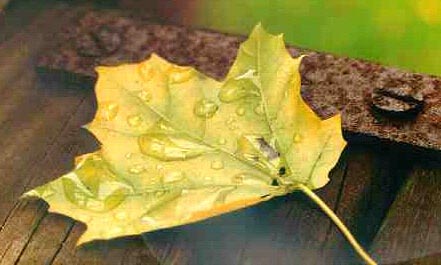
"That was probably the last time Niggle's name ever came up in conversation. However, Atkins preserved the odd corner. Most of it crumbled; but one beautiful leaf remained intact. Atkins had it framed. Later he left it to the Town Museum, anf for a long while 'Leaf: by Niggle' hung there in a recess, and was noticed by a few eyes. But eventually the Museum was burnt down, and the leaf, and Niggle, were entirely forgotten in his old country.

J.R.R. Tolkien "Tree and Leaf"  Posted by Picasa

The Reality of Trees


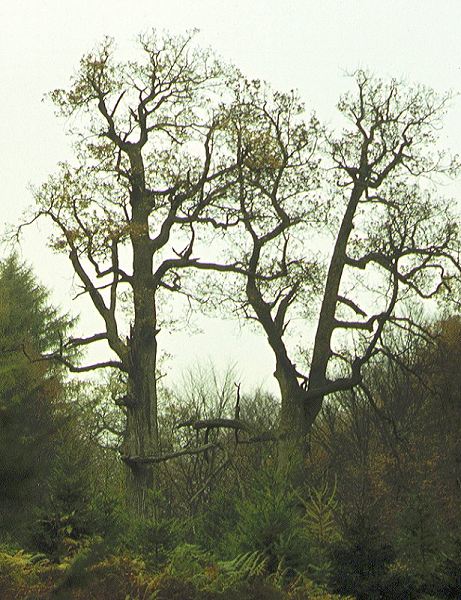
Forest in South Island, New Zealand

We do not look at trees either as Dryads or as beautiful objects while we cut them into beams: the first man who did so may have felt the price keenly, and the bleeding trees in Virgil and Spenser may be far-off echoes of that primeval sense of impiety. The stars lost their divinity as astronomy developed, and the Dying God has no place in chemical agriculture. To many, no doubt, this process is simply the gradual discovery that the real world is different from what we expected... but that is not the whole story. It is not the greatest of modern scientists who feel most sure that the object, stripped of its qualitative properties and reduced to mere quantity, is wholly real. Little scientists, and little unscientific followers of science, may think so. The great minds know very well that the object, so treated, is an artificial abstraction, that something of its reality has been lost.

C.S. Lewis, The Abolition of Man (1943)

While visiting New Zealand in November and December 2005, we visited Mount Doom, Mordor, Gollom's Pool in the North, and Isengard, Fangorn forest, the Misty Mountains, and Treebeard in the South. Gullible tourists?
 Posted by Picasa

The Ents' Marching Song


We come, we come with roll of drum: ta-runda runda runda rom!
We come, we come with horn and drum: ta-runa runa runa rom!
To Isengard! Though Isengard be ringed and barred with doors of stone;
Though Isengard be strong and hard, as cold as stone and bare as bone,
We go, we go, we go to war, to hew the stone and break the door;
For bole and bough are burning now, the furnace roars - we go to war!
To land of gloom with tramp of doom, with roll of drum, we come, we come;
To Isengard with doom we come!
With doom we come, with doom we come!

(JRRT)

 Posted by Picasa

Transformation


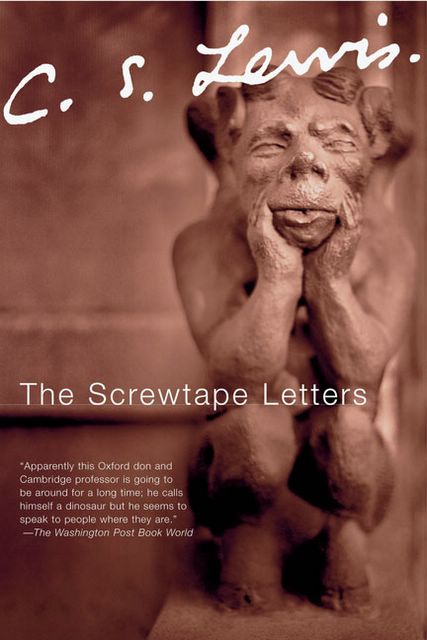
In the heat of composition I find that I have inadvertently allowed myself to assume the form of a large centipede. I am accordingly dictating the rest to my secretary. Now that the transformation is complete I recognise it as a periodical phenomenon. Some rumour of it has reached the humans and a distorted account of it appears in the poet Milton, with the ridiculous addition that such changes of shape are a 'punishment' imposed on us by the Enemy. A more modern writer - someone with a name like Pshaw - has, however, grasped the truth. Transformation proceeds from within and is a glorious manifestation of that Life Force which Our Father would worship if he worshipped anything but himself. In my present form I feel even more anxious to see you, to unite you to myself in an indissoluble embrace.

Signed Toadpipe
For his Abysmal Sublimity Under Secretary Screwtape, T.E., B.S., etc.

C.S. Lewis - "The Screwtape Letters", 1942 (page 114, 115) Posted by Picasa

On Charles Williams' death


"You will have heard of the death of my dearest friend, Charles Williams and, no doubt, prayed for him. For me too, it has been, and is, a great loss. But not at all a dejecting one. It has greatly increased my faith. Death has done nothing to my idea of him, but he has done - oh, I can't say what - to my idea of death. It has made the next world much more real and palpable. We all feel the same. How one lives and learns".

(excerpt from a letter to Sister Penelope CSMV, May 28th, 1945)
C.S. Lewis - Collected Letters, Volume II
 Posted by Picasa

Wycliffe Hall Summer School (click here)


This is an outstanding opportunity for Christians to grow in their knowledge of God and to be spiritually refreshed in the city where many famous Christians have studied in the past, including: John Wesley, Thomas Cranmer, Charles Dodgson (Lewis Carroll), George Whitefield, Dorothy L Sayers, J R R Tolkien and of course John Wycliffe himself.

C S Lewis also studied and taught in Oxford and we will be devoting considerable time to the study of his work during the week.

You can also enjoy the beautiful 'Dreaming Spires' of the Oxford University colleges, as well as a wealth of museums, theatres, restaurants and art galleries, with Blenheim Palace, the birth place of England's most famous son, Sir Winston Churchill, only a short journey away.

Summer School Prospectus
Wycliffe Hall 2006
 Posted by Picasa

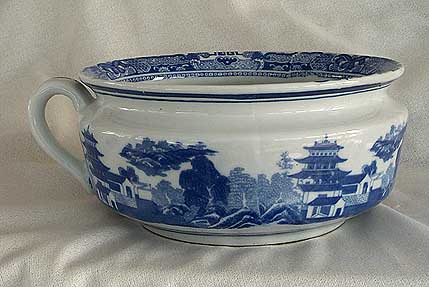
The chamber pot


Kenneth Tynan recalled that his tutor at Oxford, C.S. Lewis, was in the habit of breaking off the tutorial to piddle, noisily, in a nearby chamber pot. What with the sherry and the pipe-stuffing, it helped get him through the hour.

John Sutherland
Wednesday February 1, 2006
The Guardian
 Posted by Picasa

Draugluin and Carcharoth


Beren, in the form of a werewolf (Draugluin) at the gates of Angband,
meets Carcharoth, the Red Maw...

Before those gates alone they stood,
while Carcharoth in doubtful mood,
glowered upon them, and snarling spoke,
and echoes in the arches woke:
"Hail! Draugluin, my kindred's lord!
'Tis very long since hitherward
thou camest. Yea, tis passing strange
to see thee now: a grievous change
is on thee, lord, who once so dire,
so dauntless, and as fleet as fire,
ran over wild and waste, but now
with weariness must bend and bow!
'Tis hard to find the struggling breath
when Huan's teeth as sharp as death
have rent the throat? What fortune rare
brings thee back living here to fare--
if Draugluin thou are? Come near!
I would know more, and see thee clear".

The Geste of Beren and Luthien
by J.R.R. Tolkien (lines 3750 - 3767)
 Posted by Picasa

Jack's Letters...


Anyone know when the third volume of Jack's letters is to be published? I understand it will be under the title of "Collected Letters of C.S. Lewis, The: Narnia, Cambridge, and Joy 1950-1963".
 Posted by Picasa

a hiatus...

Sorry that there will be a bit of a hiatus during my absence in 'foreign parts' for the next 10 weeks. I will try to post on occasion, but without regular access to a computer this might prove difficult.

Roger R.

"Susan, Eve's Daughter," said Father Christmas.


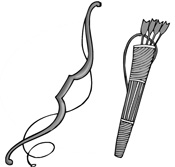
"Susan, Eve's Daughter," said Father Christmas. "These are for you," and he handed her a bow and a quiver full of arrows and a little ivory horn. "You must use the bow only in great need," he said, "for I do not mean you to fight in the battle. It does not easily miss. And when you put this horn to your lips; and blow it, then, wherever you are, I think help of some kind will come to you."

Last of all he said, "Lucy, Eve's Daughter," and Lucy came forward. He gave her a little bottle of what looked like glass (but people said afterwards that it was made of diamond) and a small dagger. "In this bottle," he said, "there is cordial made of the juice of one of the fireflowers that grow in the mountains of the sun. If you or any of your friends is hurt, a few drops of this restore them. And the dagger is to defend yourse at great need. For you also are not to be in battle."

"Why, sir?" said Lucy. "I think - I don't know but I think I could be brave enough."

"That is not the point," he said. "But battles are ugly when women fight."

C.S. Lewis, The Lion, the Witch and the Wardrobe, (1950)

 Posted by Picasa

All Hallows Eve


Lester looked round her. She saw the stars; she saw the lights; she saw dim shapes of houses and trees in a landscape which was less familiar through being so familiar. She could not even yet manage to enunciate to her companion the word death. The landscape of death lay round them; the future of death awaited them. Let them go to it; let them do something. She thought of her own flat and of Richard-no. She did not wish to take this other Evelyn there; besides, she herself would be, if anything at all, only a dim shadow to Richard, a hallucination or a troubling apparition. She could not bear that, if it could be avoided; she could not bear to be only a terrifying dream. No; they must go elsewhere. She wondered if Evelyn felt in the same way about her own home. She knew that Evelyn had continuously snubbed and suppressed her mother, with whom she lived; once or twice she had herself meant to say something, if only out of an indifferent superiority. But the indifference had beaten the superiority. It was now for Evelyn to choose. She said: "Shall we go to your place?"

Evelyn said shrilly: "No; no. I won't see Mother. I hate Mother."

Lester shrugged. One way and another, they did seem to be rather vagrants, unfortunate and helpless creatures, with no purpose and no use. She said: "Well . . . let's go." Evelyn looked up at her. Lester, with an effort at companionship, tried to smile at her. She did not very well succeed, but at least Evelyn, slowly and reluctantly, got to her feet. The lights in the houses had gone out, but a faint clarity was in the air -perhaps (though it had come quickly) the first suggestion of the day. Lester knew exactly what she had better do, and with an effort she did it. She took Evelyn's arm. The two dead girls went together slowly out of the Park.

Charles Williams : All Hallows Eve (Last paragraphs of Chapter 1 - The New Life) Posted by Picasa

I am sure...


... that some are born to write as trees are born to bear leaves: for these, writing is a necessary mode of their own development. If the impulse to write survives the hope of success, then one is among these. If not, then the impulse was at best only pardonable vanity, and it will certainly disappear when the hope is withdrawn.

C.S. Lewis to Arthur Greeves
The Letters of C.S. Lewis, (28 August 1930) Posted by Picasa

Beren & Lúthien in Angband

(Lines 3850 - 3865 of the The Geste of Beren and Lúthien)

Into the vast and echoing gloom,________________3850
more dread than many-tunnelled tomb
in Labyrinthine pyramid
where everlasting death is hid,
down awful corridors that wind
down to a menace dark enshrined;_______________3845
down to the mountain's roots profound,
devoured, tormented, bored and ground
by seething vermin spawned of stone;
down to the depths they went alone.
The arch behind of twilit shade________________3850
they saw recede and dwindling fade;
the thunderous forges' rumour grew,
a burning wind there roaring blew
foul vapours up from gaping holes.
Huge shapes there stood like carven trolls_____3855
enormous hewn of blasted rock
to forms that mortal likeness mock;
monstrous and menacing, entombed,
at every turn they silent loomed
in fitful glares that leaped and died._________3860
There hammers clanged, and tongues there cried
with sound like smitten stone; there wailed
faint from far under, called and failed
amid the iron clink of chain
voices of captives put to pain.________________3865

(JRRT)

YOU MUST LOOK AT IT TODAY... [Click Here]


An ever-expanding Virtual Tour of Oxford University and City.

Now with over 2,500 panoramas from all around Oxford, including most of the colleges, including "JRR Tolkien's Oxford" - exploring some of JRRT's favourite places.

You have total control over each image... the floor of the "University Schools Building" is worth the visit on its own. Amazing.... GO NOW!
 Posted by Picasa

Jack and Joy... and marriage


For we did learn and achieve something. There is, hidden or flaunted, a sword between the sexes till an entire marriage reconciles them. It is arrogance in us to call frankness, fairness, and chivalry 'masculine' when we see them in a woman; it is arrogance in them, to describe a man's sensitiveness or tact or tendernesss 'feminine.' But also what poor, warped fragments of humanity most mere men and mere women must be to make the implications of that arrogance plausible. Marriage heals this. Jointly the two become fully human. 'In the image of God created He them.' Thus, by a paradox, this carnival of sexuality leads us out beyond our sexes.

A Grief Observed
 Posted by Picasa