YOU MUST LOOK AT IT TODAY... [Click Here]


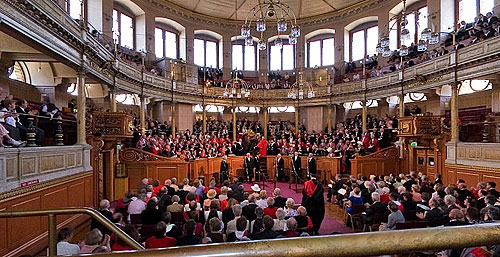
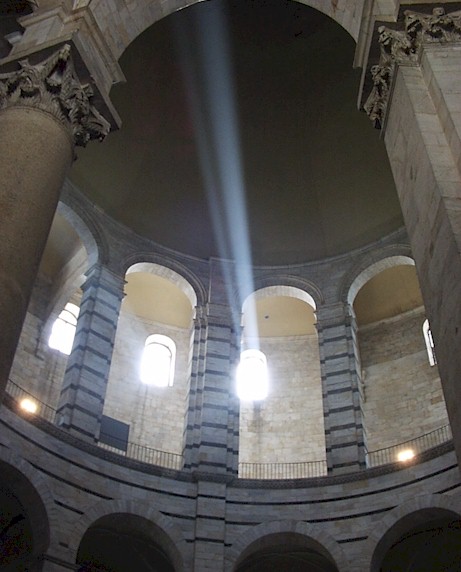
An ever-expanding Virtual Tour of Oxford University and City.

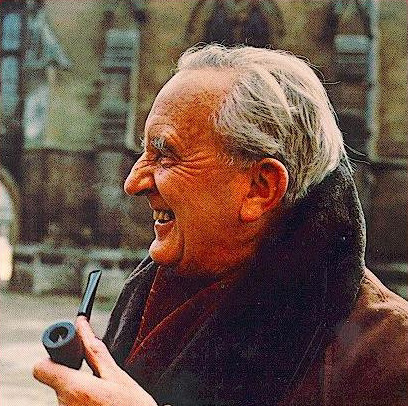
Now with over 2,500 panoramas from all around Oxford, including most of the colleges, including "JRR Tolkien's Oxford" - exploring some of JRRT's favourite places.

You have total control over each image... the floor of the "University Schools Building" is worth the visit on its own. Amazing.... GO NOW!
 Posted by Picasa

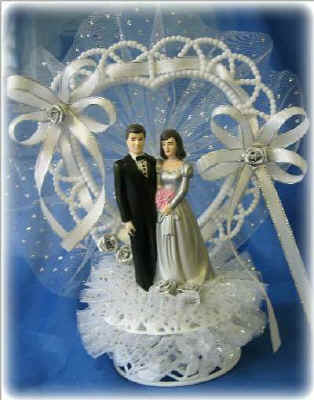
Jack and Joy... and marriage


For we did learn and achieve something. There is, hidden or flaunted, a sword between the sexes till an entire marriage reconciles them. It is arrogance in us to call frankness, fairness, and chivalry 'masculine' when we see them in a woman; it is arrogance in them, to describe a man's sensitiveness or tact or tendernesss 'feminine.' But also what poor, warped fragments of humanity most mere men and mere women must be to make the implications of that arrogance plausible. Marriage heals this. Jointly the two become fully human. 'In the image of God created He them.' Thus, by a paradox, this carnival of sexuality leads us out beyond our sexes.

A Grief Observed
 Posted by Picasa

The famous Jack Lewis quote on Marriage...

C.S. Lewis on Marriage Protection

“... I should like to distinguish two things which are very often confused. The Christian conception of marriage is one: the other is the quite different question -- how far Christians, if they are voters or Members of Parliament, ought to try to force their views of marriage on the rest of the community by embodying them in the divorce laws. A great many people seem to think that if you are a Christian yourself you should try to make divorce difficult for every one.

I do not think that. At least I know I should be very angry if the Mahommedans (sic) tried to prevent the rest of us from drinking wine. My own view is that the Churches should frankly recognise that the majority of the British people are not Christians and, therefore, cannot be expected to live Christian lives. There ought to be two distinct kinds of marriage: one governed by the State with rules enforced on all citizens, the other governed by the Church with rules enforced by her on her own members. The distinction ought to be quite sharp, so that a man knows which couples are married in a Christian sense and which are not.

From Mere Christianity, Chapter 16:

Is he right? (RR)

Tolkien on Marriage


Nearly all marriages, even happy ones, are mistakes: in the sense that almost certainly (in a more perfect world, or even with a little more care in this very imperfect one) both partners might be found more suitable mates. But the real soul-mate is the one you are actually married to.

J.R.R. Tolkien, Letter to Michael Tolkien, March 1941 Posted by Picasa

Eden's Courtesy


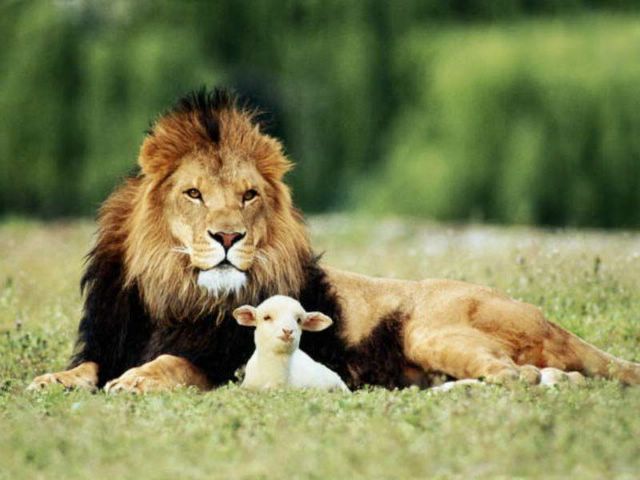
Such natural love twixt beast and man we find
That children all desire an animal book,
And all brutes, not perverted from their kind,
Woo us with whinny, tongue, tail, song, or look;
So much of Eden's courtesy yet remains.
But when a creature's dread, or mine, has built
A wall between, I think I feel the pains
That Adam earned and do confess my guilt.
For till I tame sly fox and timorous hare
And lording lion in my self, no peace
Can be without; but after, I shall dare
Uncage the shadowy zoo and war will cease;
Because the brutes within, I do not doubt,
Are archetypal of the brutes without.

C. S. Lewis, Poems, "Eden's Courtesy" (1964) Posted by Picasa

Despair?


"I will not seek it," the other replied.

"It has been opened once and it is enough. And you,are you sure that man can conquer until he has been wholly defeated? Are you sure that he can find plenitude till he has known utter despair? You will not let him despair of himself, but it may be that only in such a complete despair he finds that which cannot despair and is something other than man."

Shadows of Ecstasy - Charles Williams / ch.11

 Posted by Picasa

The Other Mrs. Moore


"There was in the grounds of The Kilns when I arrived there, away over beyond the desolate tennis court, a small two roomed weather-board shack. It was almost completely overgrown with creepers and bushes and was evidently not in use for any purpose. When I asked Fred Paxford about it he told me that it had been "Mrs Moore's house", and it had been built for her use. On further inquiry I came to understand that the "Mrs Moore" in question had been a family friend and had fallen on hard times and thus had been brought into the household in Ireland to "help", and that when things became very hard in her later life, Jack and Warnie had "rescued" her, brought her over from Ireland, and built that little bungalow for her so that she could spend her declining last years in peace and without worry.

This information may or may not be completely accurate as it was gleaned over a period of time; neither Jack nor Warnie would ever openly talk about their charitable works. The little house later became my "Gang Hut" (rather a posh one actually as it had two rooms and a coal fired heating stove) and also an alternative "sleep-out" bedroom for me to use when I was feeling adventurous or whatever.

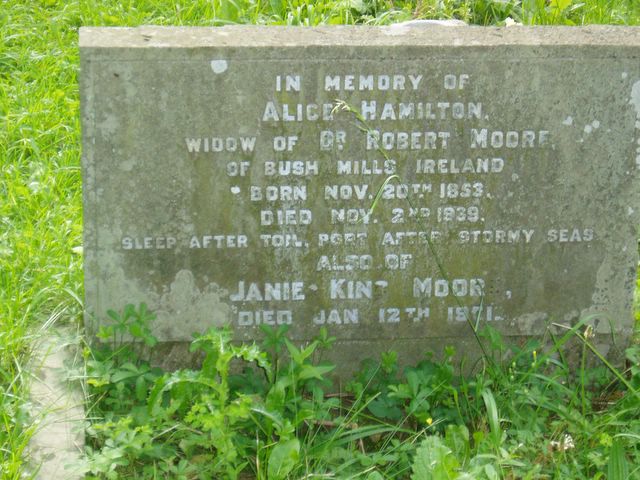
I visited Mrs Moore's grave only a few weeks ago as it happens in order to point it out to some visitors. She shares the burial place of her Earthly residue with that of the other Mrs Moore, at Holy Trinity Church, Headington Quarry.

Douglas Gresham - Lenten Lands (1988)

 Posted by Picasa

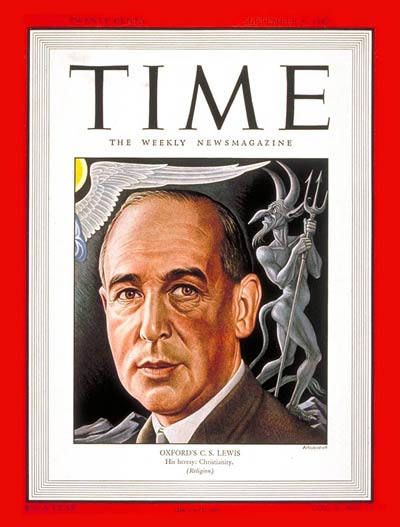
Time Magazine


Above is the cover of the issue of Time Magazine which featured Lewis in the context of his novel work on spirituality, The Screwtape Letters.

In his original preface to the book, he astutely noted, "there are two equal and opposite errors into which our race can fall about the devils. One is to disbelieve in their existence. The other is to believe, and to feel an excessive and unhealthy interest in them. They themselves are equally pleased by both errors..."
 Posted by Picasa

To Laurence Harwood

Nothing much has happened to me except that I saw a rabbit yawn. I suppose people who keep tame ones have seen it often but this was a wild rabbit and I thought it a v. curious sight. It was a very bored triangular yawn in the middle of a long hot afternoon...

C.S. Lewis
December 23rd, 1947

Looking 'Along' and Looking 'At'


I was standing today in the dark toolshed. The sun was shining outside and through the crack at the top of the door there came a sunbeam. From where I stood that beam of light, with the specks of dust floating in it, was the most striking thing in the place. Everything else was almost pitch black. I was seeing the beam, not seeing things by it.

Then I moved, so that the beam fell on my eyes. Instantly the whole previous picture vanished. I saw no toolshed, and (above all) no beam. Instead I saw, framed in the irregular cranny at the top of the door, green leaves moving on the branches of a tree outside and beyond that, ninety-odd million miles away, the sun. Looking along the beam, and looking at the beam are very different experiences.

But this is only a very simple example of the difference between looking at and looking along. A young man meets a girl. The whole world looks different when he sees her. Her voice reminds him of something he has been trying to remember all his life, and ten minutes' casual chat with her is more precious than all the favours that all other women in the world could grant. He is, as they say, 'in love'. Now comes a scientist and describes this young man's experience from the outside. For him it is all an affair of the young man's genes and a recognized biological stimulus. That is the difference between looking along the sexual impulse and looking at it.

C.S. Lewis, "Meditation in a Toolshed"
1st published in The Coventry Evening Telgraph (17 July 1945)
 Posted by Picasa

James Bond - An Inklings connection!


The year was 1959, Polish actor Vladek Sheybal arrived in England not knowing anyone and unable to speak English. He supported himself by working in menial jobs in a Polish delicatessen and then in an artifical jewellery shop in Brick Lane, London. When he finished his job at the jewellery shop, he took a train from Paddington station to Oxford with all his worldy goods in a small suitcase, and the only money he had in the world -- ten English pounds.

Soon after Vladek arrived in Oxford, the typical English weather turned sour and it began to rain. Taking refuge in a coffee shop, he was recognised and later befriended, by students who had seen the Polish film "Kanal" (1956) in which Vladek was featured, the night before at their local cinema -- a film as poignant and thought provoking now as it was then. Eventually, Vladek became a recognised student of English Literature at Merton College, Oxford after being taken under the wing of Professor Neville Coghill.

In 1963, Vladek was offered a small part in the second James Bond film "From Russia with Love" but was reluctant to take the part and turned it down. Eventually he was persuaded by Sean Connery (who was by now a close friend) to take the role of the villanous chess master 'Kronsteen'. Vladek played the part as usual, to perfection; creating a character so elegantly arrogant that 'Kronsteen' is perhaps the most believable and memorable Bond villains of the entire genre.

Wonder if Vladek met the rest of the Inklings whilst at Merton? After all J.R.R. Tolkien, Neville Coghill and Hugo Dyson were all fellows at Merton in the 1950s. Posted by Picasa

Under the Mercy

The grave of Charles Williams in an Oxford churchyard is marked by a stone bearing his name and the terse description: Poet, followed by the words, Under the Mercy.

Under the Mercy is a phrase that appears frequently in his writings, as it did in his conversation. He liked to refer to the Divinity by Its Attributes: the Mercy, the Protection, the Omnipotence. In his personal life he seemed always to be clinging to the faith that, balanced as he was upon the knife-edge of his Christian allegiance in the world of myth and magic that his passion-inflamed imagination had conjured up, he would find at last, in death if by no other route, the stillness of the Love of God. It was his wife, Michal, in one of those sudden flashes of crystal-clear insight of which she was not infrequently capable, who chose the inscription on the stone. Nothing could have been more appropriate.

Lois Lang-Sims: "Letters to Lalange – The Letters of Charles Williams to Lois Lang-Sims", page 16

Williams on Adam and Eve


They had what they wanted. That they did not like it when they got it does not alter the fact that they certainly got it.

(He Came Down From Heaven)  Posted by Picasa

Sweeter also than honey...


"More to be desired are they than gold, yea than much fine gold: sweeter also than honey and the honeycomb" (Psalm 19).

One can well understand this being said of God's mercies, God's visitations, His attributes. But what the poet is actually talking about is God's law, His commands; His "ruling" as Dr. Moffatt well translates in verse 9 (for "judgements" here plainly means decisions about conduct). What is being compared to gold and honey is those "statutes" (in the Latin version "decrees") which, we are told, "rejoice the heart". For the whole poem is about the Law, not about "Judgement" in the sense to which Chapter I was devoted.

This was to me at first very mysterious. "Thou shalt not steal, thou shalt not commit adultery" - I can understand that a man can, and must, respect these "statutes", and try to obey them, and assent to them in his heart. But it is very hard to find how they could be, so to speak, delicious, how they exhilarate. If this is difficult at any time, it is doubly so when obedience to either is opposed to some strong, and perhaps in itself innocent, desire. A man held back by his unfortunate previous marriage to some lunatic or criminal who never dies from some woman whom he faithfully loves, or a hungry man left alone, without money, in a shop filled with he smell and sight of new bread, roasting coffee, or fresh strawberries - can these find the prohibition of adultery or of theft at all like honey? They may obey, they may still respect the "statute", but surely it could be more aptly compared to the dentists's forceps or the front line than to anything enjoyable and sweet.

C.S. Lewis, Reflections on the Psalms, Chapter VI "Sweeter Than Honey" (1955) Posted by Hello

The Inquisition


One might think that the phrase of Lord Acton (that "it cannot really be held that in Rome sixteen centuries after Christ men did not know that murder was wrong") might be held to apply [to the Inquisition]; it cannot be that men did not think such methods doubtfully holy. It was not so. Deep, deeper than we believe, lie the roots of sin; it is in the good that they exist; it is in the good that they thrive and send up sap and produce the black fruits of hell. The peacock fans of holy and austere popes drove the ashes of burning men over Christendom.

Charles Williams - The Descent of the Dove  Posted by Hello

Friday 26th January, 1923

"We went at our talk like a dogfight... He (Smith) and De la Mare are fast friends and imaginative philologists of a type which they have christened 'milvers' -- partly because it is a good word, partly because it 'supplies a long felt want' in rhyming with silver. Barfield hopes soon to meet De la Mare"

"All my Road Before Me"
The Diary of CS Lewis 1922-1927

Tolkien to his son Christopher (extract)

10 April 1944

I sometimes feel appalled at the thought of the sum total of human misery all over the world at the present moment: the millions parted, fretting, wasting in unprofitable days - quite apart from torture, pain, death, bereavement, injustice. If anguish were visible, almost the whole of this benighted planet would be enveloped in a dense dark vapor, shrouded from the amazed vision of the heavens! And the products of it all will be mainly evil - historically considered. But the historic version is, of course, not the only one. All things and all deeds have a value in themselves, apart from their "causes" and "effects." No man can estimate what is really happening sub specie aeternitatis. All we do know, and that to a large extent by direct experience, is that evil labors with vast power and perpetual success - in vain: preparing always the soil for unexpected good to sprout in.

- from "The Letters of J.R.R. Tolkien"

Cobwebby hours...


I am a barbarously early riser... I love the empty, silent, dewy, cobwebby hours.

C.S. Lewis, Letters to an American Lady (30 September 1958)

 Posted by Hello

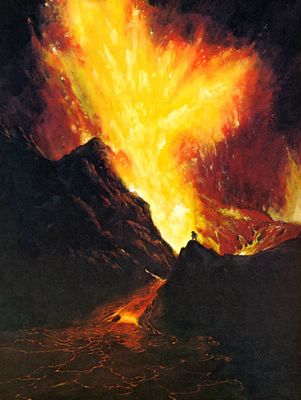
What happened to the power of the Rings once the One Ruling Ring was destroyed?


The most widely held position is that with the destruction of the One Ring all the remaining rings also lost their power (including the Three Elven Rings) and became ineffectual against the passage of time for which they were created. The reasoning behind this is because the One Ring was embodied with the power necessary to bind and control all the Rings of Power when the One's power was destroyed so was the power of all the other Rings. Those who held the Three; Gandalf, Elrond, and Galadriel departed over the sea into the West and took the Rings with them.

The evidence for this is found in several places:

"Yet many voices were heard among the Elves foreboding that, if Sauron should come again, then either he would find the Ruling Ring that was lost, or at the best his enemies would discover it and destroy it; but in either chance the powers of the Three must then fail and all things maintained by them must fade, and so the Elves should pass into the twilight and the Dominion of Men begin."
[The Silmarillion]


"But when all these things were done, and the Heir of Isildur had taken up the lordship of Men, and the dominion of the West had passed to him, then it was made plain that the power of the Three Rings also was ended, and to the Firstborn the world grew old and grey."
[The Silmarillion]


"But what would happen, if the Ruling Ring were destroyed, as you counsel? asked Gloin. We know not for certain, answered Elrond sadly. Some hope that the Three Rings, which Sauron has never touched, would then become free, and their rulers might heal the hurts of the world that he has wrought. But maybe when the One has gone, the Three will fail, and many fair things will fade and be forgotten. That is my belief."
[The Fellowship of the Ring]

The most melancholy reference is when the lady Galadriel explains to Frodo the fate of the Elves upon the outcome of the quest:

"Do you not see now wherefore your coming is to us as the footstep of Doom? For if you fail, then we are laid bare to the Enemy. Yet if you succeed, then our power is diminished, and Lothlorien will fade, and the tides of Time will sweep it away."
[The Fellowship of the Ring]

Because the primary power of the Three Rings is to slow or arrest the passage of time, Galadriel's words clearly mean that with the destruction of the One Ring, they too lose their power.
(end) Posted by Hello

What About the Powers of the Seven and Nine?


As stated, the Seven and Nine Rings were originally made by the Elves and not evil until Sauron forged the One and later took these rings by war. Their initial purpose was to slow the passage of time and preserve beauty, but since Sauron had a part in their making they became accursed and had evil powers. He gave the rings to different races of Middle-earth to enslave and so control them.

Sauron gave the Seven to the Dwarves, who proved harder to enslave:

"They ill endure the domination of others, and the thoughts of their hearts are hard to fathom, nor can they be turned to shadows. They used their rings only for the getting of wealth; but wrath and an over mastering greed of gold were kindled in their hearts..."
[The Silmarillion]


This implies their rings had other powers but were not used probably because this would draw attention to the user and all that he did.

Sauron gave the Nine to Mortal Men who proved easiest to ensnare. It was said that:

"Those who used the Nine Rings became mighty in their day, kings, sorcerers, and warriors of old. They obtained glory and great wealth... They had, as it seemed, unending life, yet life became unendurable to them. They could walk, if they would, unseen by all eyes in this world beneath the sun, and they could see things in worlds invisible to mortal men..."
[The Silmarillion]

According to The Letters of J.R.R. Tolkien #131, the Seven and Nine conferred invisibility to the user as well as unending life. However, eventually the user would fade and become a wraith under the control of Sauron, the Dark Lord.

The Three Elven Rings however, did not confer invisibility.
 Posted by Hello